






How to Prevent Water-Filled Barricades from Cracking When They Freeze

SONCO Safety Marketplace, January 28, 2025
Read more about the author


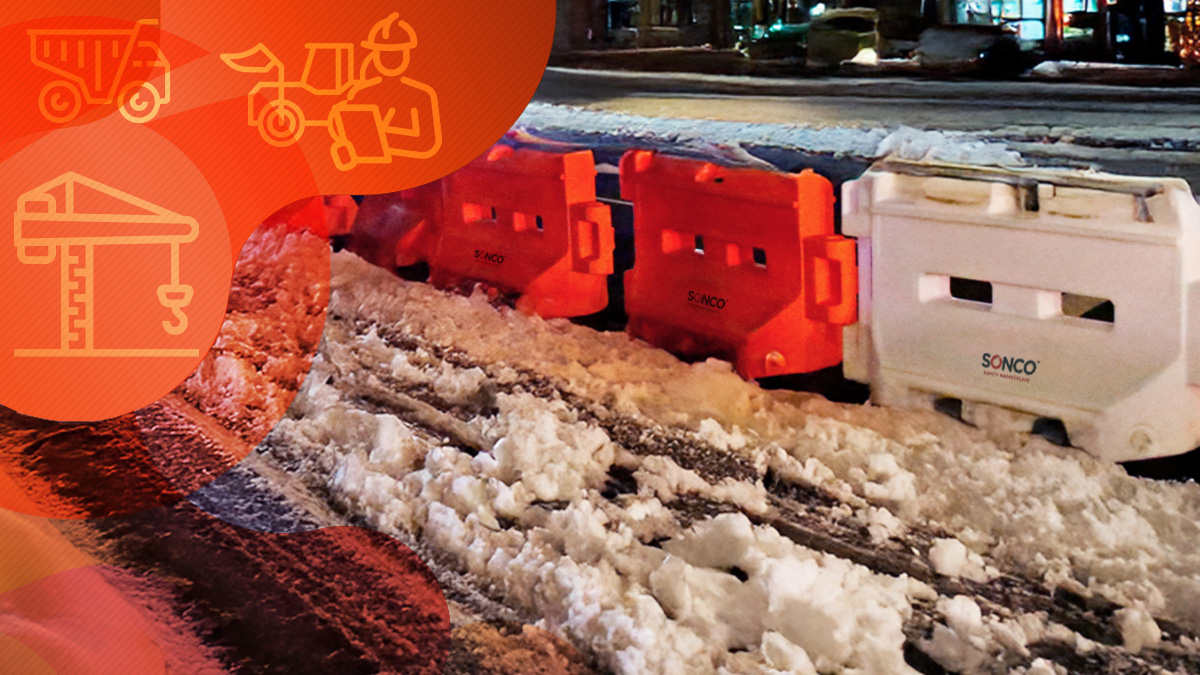
Yes, water-filled barricades can freeze. When they do, the water inside expands and builds internal pressure against the barrier's walls, seams, and connection points. Left unmanaged, that pressure can crack, deform, or otherwise damage the barricade.
The good news is that most freeze damage is preventable. With the right winter preparation, including draining at the right time, watching the weather, and inspecting barriers regularly, you can keep water-filled barricades functional and safe through the coldest months.
This guide breaks down why freezing causes damage, how to prevent it, and when a water-filled barricade isn't the right call for the conditions.
Key Takeaways
- Water expands as it freezes, creating pressure that can crack the barricade.
- Drain before prolonged freezes, and don't refill until temps stabilize above freezing.
- Monitor weather and freeze/thaw cycles instead of reacting after damage appears.
- Salt and antifreeze aren't reliable fixes; both carry their own risks.
- Inspect regularly and pull any damaged barricade from service right away.
Can Water-Filled Barricades Freeze and Crack?
Yes, water-filled barricades can freeze, and freezing is one of the most common causes of cracking and structural damage in cold-weather traffic control setups. The barricade itself doesn't need to fail on its own; it's the water inside doing the damage.
What Happens When Water Inside a Barricade Freezes?
Water expands by roughly 9% in volume as it turns to ice. Since a water-filled barricade is a sealed or semi-sealed container, that expansion has nowhere to go. Instead, it pushes outward against the barrier's walls, seams, and molded connection points.
A few things happen as a result:
- Internal pressure builds as more of the water inside freezes.
- Walls, seams, and joints absorb the stress first, since these are typically the weakest points in the structure.
- Cold temperatures make plastic materials more rigid, so they're less able to flex and absorb that pressure the way they might in milder conditions.
- Repeated freeze/thaw cycles compound the problem, weakening the barricade even when no cracks are visible yet.
- A single hard freeze might not visibly damage a barricade. But sustained or repeated freezing is where the real risk builds.
Why Freeze-and-Thaw Cycles Can Be a Problem
A one-time freeze is a single stress event. A freeze/thaw cycle, where water freezes, partially thaws, and refreezes, is more damaging because it repeats that stress over and over.
Each cycle can widen existing micro-cracks, loosen connection points, and gradually weaken the barricade's structural integrity, even if nothing looks obviously wrong on the surface.
This is why barricades that seem fine after the first cold snap can fail weeks later, after several freeze/thaw cycles have taken their toll.

How to Prevent Water-Filled Barricades from Cracking in Winter
Freezing conditions can't always be avoided, but freeze-related damage largely can. These four steps focus on reducing internal pressure and minimizing stress on the barricade structure.
1. Drain Water Before Prolonged Freezing
Removing water before an extended freeze prevents internal pressure from ever building in the first place. This step matters most when temperatures are expected to stay below freezing overnight or for several consecutive days. A single short dip below freezing is a lower priority than a sustained cold stretch.
2. Monitor Weather Conditions
Not every cold snap calls for action. A brief overnight dip below freezing carries far less risk than several days of sustained cold. Tracking the forecast helps you decide when it's actually necessary to drain or pull barriers from service, rather than doing it reactively or not at all.
3. Wait to Refill Until Temperatures Stabilize
Refilling a barricade too soon after a freeze can trap water that simply freezes again overnight, restarting the same pressure cycle. Wait until temperatures hold consistently above freezing before refilling to avoid triggering another round of freeze/thaw stress.
4. Follow Manufacturer Guidelines
Barricade design, wall thickness, and materials vary by manufacturer and model, and that affects how well a given barricade handles freezing conditions. Always check manufacturer recommendations for your specific barricade before making assumptions about winter use.
Should You Use Salt or Antifreeze in Water-Filled Barricades?
Adding something to the water is a common instinct, but neither salt nor antifreeze is a dependable fix, and both introduce their own risks.
Can You Put Salt in a Water-Filled Barricade?
Salt lowers the freezing point of water, but it doesn't prevent freezing outright under sustained cold. A few reasons it falls short as a solution:
- Partial freezing can still occur, which means internal pressure can still build.
- Salt residue may increase material wear or corrosion over time.
- Getting the right salt concentration is difficult to control across a large barricade system.
- Environmental or site restrictions may limit or prohibit its use altogether.
- Because of these limitations, salt shouldn't be treated as a reliable way to prevent cracking.
Can You Put Antifreeze in a Water-Filled Barricade?
Antifreeze is often assumed to be the stronger option, but it's generally not suitable for water-filled traffic barricades:
- Most antifreeze products are toxic and environmentally hazardous.
- A leak can create real contamination risk on an active jobsite.
- Barricade manufacturers typically don't approve antifreeze use in their products.
- Improperly mixed antifreeze solutions can still freeze or separate.
For these reasons, antifreeze isn't considered a safe or compliant way to manage freezing in water-filled barricades.
What Is the Safest Approach?
Rather than relying on additives, the most dependable approach is proper drainage, weather monitoring, and manufacturer guidance, paired with routine inspection. Additives may seem like a shortcut, but they introduce new risks without reliably solving the underlying problem.

Winter Water-Filled Barricade Inspection Tips
Before, during, and after freezing conditions, inspect barricades regularly for signs of damage that could affect their performance. Look for:
- Cracks anywhere along the barricade body
- Deformation or warping in the shape of the barrier
- Leaks, which can signal a compromised seal
- Stress at seams and joints, where damage tends to show up first
- Damaged molded connection points, which affect how barriers link together
- Uneven weight distribution, often a sign of partial freezing
- New damage after freeze/thaw cycles, since repeated cycles can worsen existing issues
- Rigid or frozen barriers that shouldn't be moved, since cold makes materials less flexible and more prone to handling damage
- Any barricade showing cracks, leaks, or significant deformation should be removed from service before it causes bigger problems.
What Are the Risks of Using a Frozen or Damaged Barricade?
A cracked or deformed barricade doesn't just look bad. It stops doing its job as effectively, and continuing to use it can create real safety and cost problems.
Stability and Alignment
Structural damage can affect how barriers connect and align with one another, increasing the risk of movement or separation in active traffic areas.
Leaks and Uneven Weight
Damaged barricades often develop leaks and uneven weight distribution, both of which reduce how stable and predictable the barrier is once it's in place.
Handling and Repositioning
Damage, along with cold, rigid materials in general, makes barricades harder and riskier to handle or reposition safely during winter operations.
Further Damage and Replacement Costs
Once temperatures rise, existing damage tends to get worse rather than better. Continuing to use compromised barricades often leads to unplanned replacements, downtime, and added safety concerns, especially on projects running through changing winter conditions.
When Should You Use an Alternative to Water-Filled Barricades?
Water-filled barricades work well in a lot of environments, but certain winter conditions make them less practical.
Prolonged or Extreme Freezing Temperatures
In regions with extended stretches below freezing, managing water levels reliably becomes difficult, and the risk of cracking and material stress rises significantly.
Long-Term Winter Installations
For barricades that need to stay in place all winter, repeated freeze/thaw cycles accelerate wear, which can shorten the barricade's usable lifespan and increase maintenance needs.
Sites With Limited Drainage or Maintenance Access
If a site makes it hard to drain, inspect, or service barriers regularly, an unexpected freeze can lead to a higher risk of failure before anyone notices.
Projects Requiring Frequent Repositioning
Frozen or rigid barriers are harder to move safely. On projects that need frequent layout changes, this can slow work down and increase the odds of handling damage.
In these situations, it's often worth evaluating another traffic-control product or adjusting your installation strategy for the season, rather than assuming water-filled barricades are the right fit year-round.
Choosing the Right Traffic Barricade for Winter Conditions
Before deciding on a barricade type, it helps to think through a few questions about your specific project:
- How long will the barricades remain installed?
- How severe are the winter temperatures expected to get?
- Can the barricades be drained easily when needed?
- Will they need to be repositioned during the project?
- How frequently can they realistically be inspected?
- What does the manufacturer recommend for winter use?
Your answers to these questions will point you toward the right barricade type, and the right winter maintenance plan, for your project.

Frequently Asked Questions
Should you drain water barricades before freezing temperatures? Yes, especially before extended periods of sustained freezing. Draining removes the water that would otherwise expand and build internal pressure.
Can you put antifreeze in a water-filled barricade? It's generally not recommended. Most antifreeze is toxic, poses contamination risks if it leaks, and typically isn't approved by barricade manufacturers.
What should you do with a cracked water-filled barricade? Remove it from service. Continuing to use a cracked or leaking barricade increases the risk of further damage and safety issues.
Are water-filled barricades suitable for extreme winter conditions? Not always. In cases of prolonged or extreme freezing, limited site access for maintenance, or frequent repositioning needs, an alternative traffic-control solution may be a better fit.
Protect Your Traffic Control Setup This Winter
Winter conditions create real challenges for temporary traffic control, but proper preparation, regular inspections, and choosing the right barricade for the environment can go a long way toward reducing damage and unexpected downtime.
Need help finding the right traffic-control solution for your project? Talk to SONCO or request a quote.
Trend now

Temporary Fence Rental Lifespan: Tips to Make Your Fence Last Longer
Learn the storage habits that extend the lifespan of every panel.

How to Manage a Crowd at an Event: A Complete Guide for Event Managers
Learn how to manage a crowd at an event with proven strategies for planning, signage, barriers, staffing and more.

How to Install a Mesh Chain-Link Fence: Step-by-Step Guide
Learn how to install a mesh chain-link fence step by step.
Search for category
Request a quote now! 