






What Is an Anti Ram Vehicle Barrier?

SONCO Safety Marketplace, March 19, 2026
Read more about the author


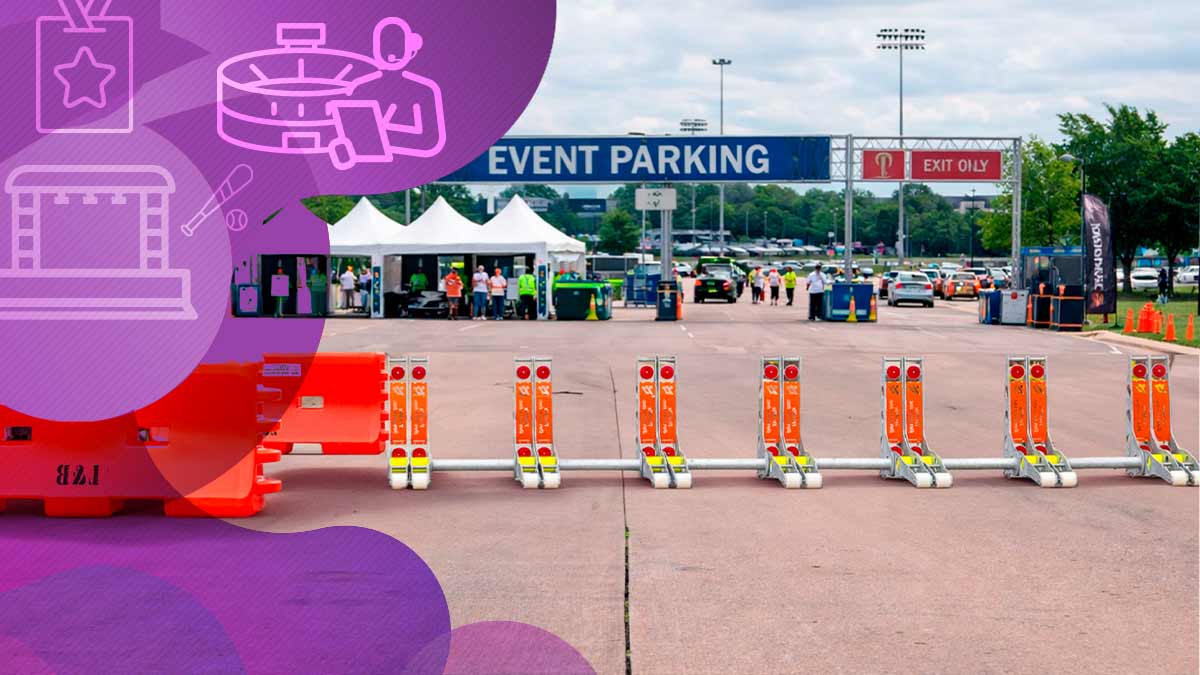
Vehicles are everywhere. And in most public spaces, there is nothing stopping one from driving straight into a crowd.
That is the problem anti ram vehicle barriers solve. These are physical security systems designed to stop a vehicle before it reaches people, whether the threat is intentional or accidental.
They are used at public events, government buildings, pedestrian zones, construction sites and anywhere else that people and vehicles share the same space.
Interest in this type of protection has grown significantly in recent years, and for good reason. High profile incidents around the world have shown that without certified barriers in place, the consequences can be devastating.
This guide covers everything you need to know about anti ram vehicle barriers: what they are, the different types available, what certifications actually mean, where they are used and how to choose the right one for your situation.
What Is an Anti Ram Vehicle Barrier?
An anti ram vehicle barrier is a physical security system built to stop a vehicle from entering a protected area. Unlike a standard fence or traffic cone, these barriers are engineered to absorb and redirect the force of a moving vehicle, preventing it from reaching people or structures on the other side.
They come in many forms, from permanent steel bollards anchored into the ground to portable modular systems that can be deployed in minutes. What they all have in common is that they are tested and rated to withstand a specific vehicle weight at a specific speed.
The term is often used interchangeably with "hostile vehicle mitigation barrier" or "anti vehicle barrier," but they all refer to the same category of product.
The key distinction from ordinary barriers like water filled barricades or traffic cones is certification. A true anti ram barrier has been independently tested to prove it can stop a vehicle. That certification is what makes it a security tool rather than just a visual deterrent.
Why Anti Ram Barriers Are in Higher Demand
Public spaces have always been a security challenge. But in recent years, vehicle intrusions at events, markets and pedestrian zones have pushed perimeter protection to the top of the priority list for event organizers, municipalities and venue operators.
The reasons are both practical and legal:
- Incidents are increasing. Vehicle intrusions at public gatherings have been reported across the US and Europe with growing frequency, from holiday markets to parades and street celebrations.
- Accidental intrusions are more common than most people think. In the United States, accidental vehicle intrusions injure more than 16,000 people every year, even without any hostile intent involved.
- Liability is real. Organizations that fail to provide adequate perimeter security face growing legal exposure. Duty of care standards are increasingly being applied to event and venue operators when it comes to vehicle access control.
- Regulations are catching up. More cities and jurisdictions are requiring certified vehicle barriers for permitted public events, making compliance a practical necessity rather than just a best practice.
The result is a market that has moved from "nice to have" to "required" in a relatively short period of time.
Types of Anti Ram Vehicle Barriers
Not all anti ram barriers work the same way or serve the same purpose. The right choice depends on whether you need a permanent installation or a temporary one, how quickly it needs to be deployed, and what level of threat you are designing for.
Here is a breakdown of the main types:
Fixed Bollards
Fixed bollards are permanently anchored into the ground and offer the highest level of protection. They are common outside government buildings, airports, embassies and high traffic retail areas. Because they are structural, they require significant installation work and are not practical for temporary use.
Best for: Permanent locations with consistent security requirements.
Removable Bollards
Removable bollards use a sleeve system that is anchored into the ground, allowing the bollard itself to be lifted out when vehicle access is needed and reinstalled when it is not. They offer flexibility without sacrificing certification.
Best for: Locations that need to alternate between open and restricted vehicle access.
Surface Mounted Barriers
Surface mounted barriers are bolted directly onto an existing surface rather than embedded into the ground. Installation is faster and less invasive than fixed bollards, though the level of protection depends heavily on the quality of the surface they are mounted to.
Best for: Locations where ground excavation is not possible or practical.
Portable and Deployable Barriers
Portable barriers are designed to be set up and taken down quickly without any ground installation. They are the go to solution for temporary events, emergency deployments and situations where the perimeter changes regularly. The best portable systems are certified to the same standards as permanent ones.
Best for: Events, temporary road closures, emergency response and any situation where flexibility matters.
Water Filled Barriers
Water filled barriers are lightweight when empty and heavy when filled, making them easy to transport and quick to deploy. They provide a physical presence and can slow or redirect vehicles, but most are not certified to the same impact resistance standards as steel anti ram systems. They work well as a complement to certified barriers rather than a standalone solution.
Best for: Perimeter definition, traffic channeling and lower threat environments.
Type
Permanent or Temporary
Installation Required
Certified Protection
Fixed Bollards
Permanent
Yes
Yes
Removable Bollards
Both
Yes (sleeve)
Yes
Surface Mounted
Permanent
Yes (bolts)
Varies
Portable and Deployable
Temporary
No
Yes (best systems)
Water Filled
Temporary
No
Rarely

What Is ASTM F2656 and Why Does It Matter?
When shopping for an anti ram vehicle barrier, you will come across the term ASTM F2656. Understanding what it means is the difference between buying a certified security system and buying something that just looks like one.
What ASTM F2656 is
ASTM F2656 is the American standard for testing vehicle crash barriers. It is published by ASTM International, an independent organization that develops technical standards across a wide range of industries. The standard defines exactly how a barrier must be tested to prove it can stop a vehicle of a specific weight traveling at a specific speed.
A barrier that carries an ASTM F2656 certification has been physically tested under those conditions, not just engineered to meet them on paper.
What the rating codes mean
The certification comes with two codes that tell you exactly what the barrier was tested against:
Code
What It Means
M30, M40, M50
Vehicle speed during the test: 30, 40 or 50 mph
P1, P2, P3
Penetration level allowed after impact: P1 is up to 20 ft, P2 up to 6.5 ft, P3 is less than 3.3 ft
So a barrier rated U30/P3, like the Block Axess system, was tested against a vehicle traveling at 30 mph and stopped it within 3.3 feet of the barrier line. That is the combination most commonly required for public events and pedestrian zones.
Why it matters when buying
Not every barrier on the market is certified. Some products are marketed as vehicle barriers without any independent testing behind them. When a barrier carries ASTM F2656 certification, you have documented proof of what it can and cannot stop. That matters for security planning, for insurance purposes and increasingly for regulatory compliance when applying for event permits.
If a barrier does not list its ASTM F2656 rating, ask for it. If the vendor cannot provide it, that tells you something important.
Where Are Anti Ram Vehicle Barriers Used?
Anti ram barriers are not limited to high security government installations. Their use has expanded significantly as awareness of vehicle intrusion risks has grown across both public and private sectors. These are the most common environments where you will find them:
Public Events and Gatherings
Concerts, festivals, parades, marathons and street fairs all share one common characteristic: large numbers of people in open spaces with vehicle access nearby. Portable anti ram barriers are increasingly required for permitted public events in major cities, used to define pedestrian zones and block vehicle access points during the event.
Government and Civic Buildings
Courthouses, city halls, embassies and military installations have used fixed anti ram barriers for decades. These are typically permanent installations designed to protect against both accidental and intentional vehicle intrusions.
Retail and Commercial Areas
Storefronts, outdoor markets and shopping districts use anti ram barriers to protect against the more than 100 daily vehicle intrusions into commercial buildings reported across the United States. Permanent bollards are the most common solution here.
Pedestrian Zones and Urban Areas
Cities that have converted streets into pedestrian only zones use anti ram barriers at entry points to enforce vehicle restrictions while maintaining emergency vehicle access through removable or deployable systems.
Construction Sites
Active construction sites in urban environments use portable barriers to protect workers and pedestrians from vehicle intrusions at the perimeter. They also help control access points and channel traffic safely around the work zone.
Temporary Road Closures and Emergency Response
Law enforcement and emergency management teams use deployable anti ram barriers to quickly establish controlled perimeters during incidents, road closures or emergency situations where speed of setup is critical.
How to Choose the Right Anti Ram Vehicle Barrier
With several types of barriers available at very different price points and protection levels, choosing the right one comes down to a few key questions. Work through these before making a decision:
Is the Threat Permanent or Temporary?
This is the first question to answer because it immediately narrows your options. If you need protection at a fixed location year round, a permanent solution like fixed or surface mounted bollards makes more sense. If you need protection for an event, a seasonal installation or a location that changes, a portable deployable system is the practical choice.
What Level of Threat Are You Designing For?
Not every situation requires a barrier rated to stop a 7.5 ton vehicle at 50 mph. Think about the realistic threat scenario for your specific location:
- A street festival in a pedestrian zone has different requirements than a government building entrance
- A construction site perimeter has different requirements than an embassy
- A temporary road closure has different requirements than a permanent retail frontage
Matching the barrier rating to the actual threat level keeps costs reasonable without compromising on necessary protection.
Do You Need a Certified Barrier?
If you are applying for an event permit, working on a government contract or operating in a jurisdiction that mandates certified vehicle barriers, ASTM F2656 certification is not optional.
Confirm the regulatory requirements for your specific situation before selecting a product.
Even outside of regulatory requirements, certification gives you documented proof of performance that matters for insurance and liability purposes.
How Quickly Does It Need to Be Deployed?
Some situations allow for planned installation over days or weeks. Others require a barrier to be operational within hours. If deployment speed matters, portable modular systems that can be set up by one or two people without tools or ground work are the right category to look at.
What Is Your Budget?
Anti ram barriers range from a few hundred dollars for basic surface mounted options to tens of thousands for certified permanent installations. A useful way to frame the budget question:
Budget Range
What It Typically Gets You
Low
Non certified barriers, water filled systems, basic bollards
Mid
Surface mounted certified bollards, entry level portable systems
High
Certified portable deployable systems, removable bollard systems
Premium
Permanent fixed bollard installations, custom engineered solutions
The lowest cost option is rarely the right answer when certified protection is required. But within the certified category, portable systems offer a strong combination of performance and value for organizations that need flexibility.
Block Axess: SONCO's Portable Vehicle Mitigation System
If your situation calls for a certified portable barrier that can be deployed quickly without ground installation, the Block Axess Vehicle Mitigation System is worth a close look.
It is designed for exactly the scenarios described in this guide: public events, pedestrian zones, temporary road closures and any environment where you need certified anti ram protection without a permanent installation.
What It Is
The Block Axess is a modular galvanized steel barrier system that expands to 16 feet when fully deployed. It is certified to ASTM F2656 U30/P3, meaning it has been independently tested to stop vehicles weighing up to 7.5 tons traveling at 30 mph within 3.3 feet of the barrier line.
It is sold as a complete kit. Everything you need to deploy it comes in the box:
- 14 modules
- 6 connector tubes
- 2 end caps
- 14 casters
- 2 wrenches
- 1 storage rack
What Makes It Different
Most certified anti ram barriers require ground installation, heavy equipment or a professional crew. Block Axess does not. Two people can set it up in 15 minutes. Built in casters allow the assembled system to be rolled into position without lifting. When the event is over, it breaks down into a compact kit that stores on its own dedicated rack, making transport and repositioning straightforward.
It is also tamper resistant. Special tools are required for setup and removal, which means once it is in place, it stays in place until you decide otherwise. And for organizations that want branded security, the laser etched plates can display an event name, company logo or other custom information.
Who It Is For
Block Axess is the right fit if you are:
- An event organizer who needs certified vehicle protection for permitted public events
- A municipality or city agency managing temporary pedestrian zones or road closures
- A security company that deploys barriers across multiple sites and needs a portable certified solution
- A venue operator who needs flexible perimeter protection without a permanent installation
How It Complements Other SONCO Products
For maximum perimeter coverage, Block Axess works well alongside SONCO's SafeGuard 36 water barriers. Water barriers handle perimeter definition and traffic channeling while Block Axess covers the certified anti ram protection at key access points. The two systems together give you a complete layered perimeter solution.
Frequently Asked Questions
What is the difference between an anti ram barrier and a regular barrier?
A regular barrier like a traffic cone, water filled barricade or standard fence is designed to guide or signal — not to stop a vehicle. An anti ram barrier is engineered and independently tested to absorb the impact of a moving vehicle and prevent it from passing through. The key difference is certification. A certified anti ram barrier has documented proof of what it can stop. A regular barrier does not.
What does ASTM F2656 certified mean?
ASTM F2656 is the American standard for vehicle crash barrier testing. A barrier that carries this certification has been physically tested against a vehicle of a specific weight traveling at a specific speed. The rating tells you two things: how fast the test vehicle was traveling (M30, M40 or M50 for 30, 40 or 50 mph) and how far the barrier allowed the vehicle to penetrate after impact (P1, P2 or P3). A U30/P3 rating means the barrier stopped a vehicle at 30 mph within 3.3 feet of the barrier line.
Can one person deploy a portable anti ram barrier?
Yes, the best portable anti ram barrier systems are designed for single person deployment. The Block Axess system, for example, can be fully assembled by one person in 14 minutes, with built in casters that allow the assembled barrier to be rolled into position without lifting or heavy equipment.
Are anti ram barriers required for public events?
It depends on the jurisdiction and the type of event. Many cities now require certified vehicle barriers as a condition of permits for large public gatherings, particularly in pedestrian zones or areas with high foot traffic. Requirements vary significantly by location, so it is worth checking with your local permitting authority before planning your perimeter security.
What is the difference between an anti ram barrier and a bollard?
Bollards are one type of anti ram barrier. The term "anti ram barrier" refers to the broader category of systems designed to stop vehicles, which includes bollards, portable modular systems, surface mounted barriers and more. Bollards are vertical posts, either fixed or removable, that are anchored into the ground. Portable anti ram barriers achieve the same protection without ground installation, making them the more flexible option for temporary use.
What is hostile vehicle mitigation?
Hostile vehicle mitigation, or HVM, is the practice of designing physical environments to prevent vehicles from being used as weapons against people or infrastructure. It includes everything from the placement of certified barriers and bollards to the strategic use of landscaping and urban furniture to naturally limit vehicle access. Anti ram barriers are one of the primary tools used in hostile vehicle mitigation planning.
Get the Right Barrier for Your Site
If you are protecting a public event, a pedestrian zone or any space where vehicles and people share the same area, the Block Axess Vehicle Mitigation System gives you certified anti ram protection that one person can deploy in under 15 minutes.
No ground installation. No heavy equipment. No compromise on certification.
Visit the Block Axess product page to review full specs, or request a quote and a SONCO specialist will help you figure out the right configuration for your specific situation.
Trend now

Temporary Fence Rental Lifespan: Tips to Make Your Fence Last Longer
Learn the storage habits that extend the lifespan of every panel.

How to Manage a Crowd at an Event: A Complete Guide for Event Managers
Learn how to manage a crowd at an event with proven strategies for planning, signage, barriers, staffing and more.

How to Install a Mesh Chain-Link Fence: Step-by-Step Guide
Learn how to install a mesh chain-link fence step by step.
Search for category
Request a quote now! 