






How to Manage a Crowd at an Event: A Complete Guide for Event Managers

Nick Criscuolo, June 24, 2026
Read more about the author


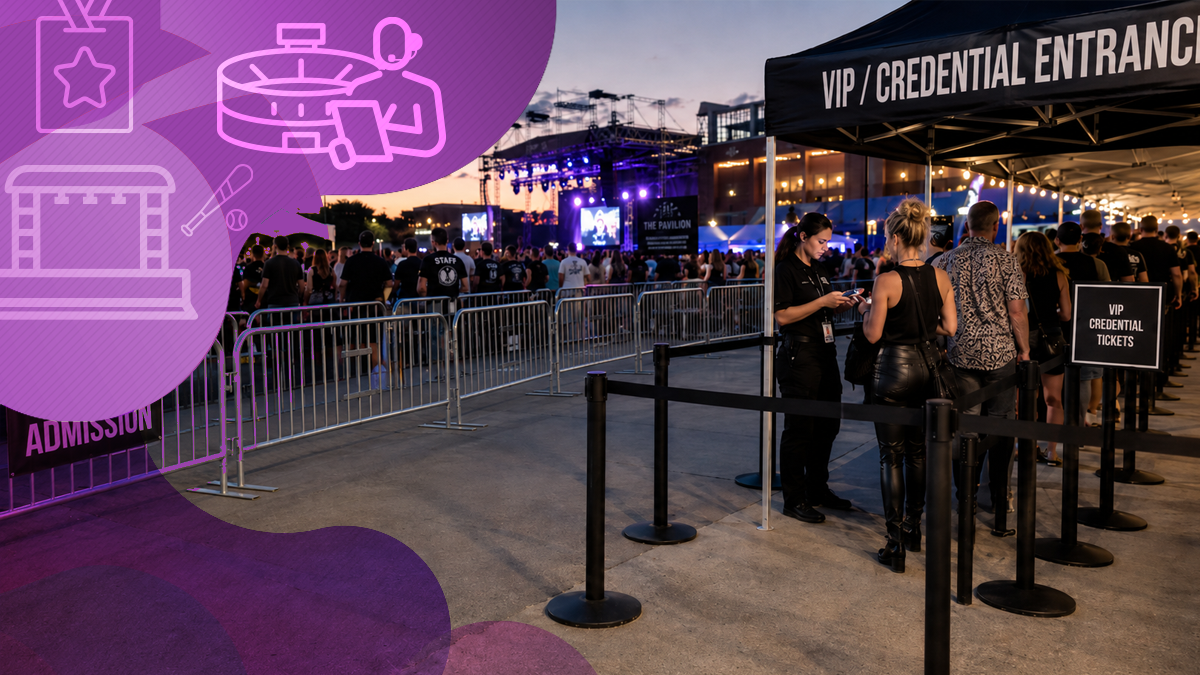
Whether you're organizing a music festival, sporting event, convention, fair, corporate gathering, or community celebration, crowd management is one of the most critical responsibilities of any event professional.
Poor crowd management has real consequences. The Astroworld Festival tragedy in 2021 and the Love Parade disaster in Duisburg in 2010 are frequently cited examples of what happens when planning fails under pressure.
A well-managed crowd creates a positive guest experience, improves venue operations, reduces liability risks, and helps ensure everyone returns home safely. On the other hand, poor crowd management can lead to congestion, confusion, property damage, injuries, emergency response delays, and reputational harm.
The good news: the vast majority of crowd-related incidents are preventable. Successful crowd management doesn't happen by accident. It requires careful planning, strategic signage, effective traffic flow design, trained personnel, and the right crowd-control equipment.
With 50 years of experience supplying crowd control equipment to venues, event producers, rental companies, and public agencies, including supporting security operations for the 2016 Presidential Inauguration in Washington, D.C., SONCO developed this guide to help event managers build a reliable operational framework from the ground up.
Key Takeaways
- Effective crowd management starts long before the event opens. Anticipating bottlenecks, setting capacity thresholds, and preparing emergency procedures during the planning phase is what separates smooth events from dangerous ones.
- The NFPA requires a minimum of one trained crowd manager per 250 attendees. Large-scale events typically require significantly more.
- The 10-80-10 rule guides smart resource allocation: design your environment for the 80% who follow clear direction, so your security team can focus on the 10% who won't.
- Barrier selection must match your event type and size. What works for a 300-person indoor convention won't hold for a 10,000-person outdoor festival.
- Clear signage is one of the strongest returns on investment in crowd management. It helps reduce staff pressure, improve crowd flow, and support emergency response when clear direction matters most.
Questions You Should Ask Yourself (and Your Team) Before Planning
Before developing a crowd management plan, gather your event stakeholders and ask the following questions:
- Capacity and attendance: How many attendees are expected, and what are the venue's hard capacity limits? Where are the primary entry and exit points, and which areas are most likely to experience congestion?
- Safety and emergencies: What emergency evacuation procedures are in place? How will medical, security, and emergency teams be positioned throughout the venue? What weather-related risks could affect crowd movement?
- Access and navigation: How will attendees find their way throughout the venue? Are there VIP, restricted, or staff-only areas that require dedicated access control?
- Infrastructure: What crowd-control barriers and signage will be needed? How will pedestrian and vehicle traffic interact on-site?
Answering these questions early helps identify potential risks before they become operational problems.
How to Manage a Crowd at an Event: 7 Core Strategies
Crowd control at a live event is less about reacting to problems and more about designing an environment where problems are unlikely to occur in the first place. The strategies below cover the core pillars of effective crowd management (from pre-event planning to real-time monitoring) giving you and your team a clear operational framework to work from regardless of event size or format.
1. Create a Detailed Crowd Management Plan
Every successful event begins with a documented plan. Before your first team briefing, that plan should map out crowd flow, staffing assignments, emergency procedures, communication protocols, and equipment placement across the full event timeline.
At minimum, your crowd management plan should cover expected attendance numbers, venue maps with entrance and exit layouts, queue management strategies, emergency evacuation routes, barrier placement, and signage deployment. Planning ahead allows teams to prevent issues rather than react to them mid-event.
2. Use Clear and Consistent Event Signage
Confused attendees create bottlenecks, and bottlenecks create safety risks. Strategically placed signage helps guests navigate the venue independently, which directly reduces pressure on your staff and security teams.
At a minimum, signage should clearly identify entrances and exits, ticketing areas, restrooms, parking zones, emergency exits, restricted-access areas, food and beverage locations, and first-aid stations. The goal is a venue where an attendee can answer their own question before they ever need to flag down a staff member.
3. Choose the Right Crowd Control Barriers
Not all crowd-control solutions are built for the same environment. Barrier choice depends on three factors: expected crowd density, event duration, and the behavior profile of your attendees. Below is a guide to the most common options:
| Steel Barricades | Concerts, festivals, high-density crowd control | Medium crowds (500+) | Outdoor/Indoor | Metal Barricade S-400 |
| Concert Barriers | Front-of-stage, concerts, festivals, high-pressure crowd scenarios | Large crowds (1,000+) | Outdoor/Indoor | StageGuard A-100 / A-110 Series |
| Retractable Belt Stanchions | Queuing, indoor navigation | Small groups (under 500) | Indoor | Retractable Belt Barriers + Posts |
| Temporary Fencing | Event boundary, restricted zones, perimeter definition | Any size | Outdoor | Temporary Fence Panels + Bases + Accessories |
| Water-Filled Barriers | Vehicle traffic control, protected pedestrian zones | Any size | Outdoor | Jersey-style Water Barriers |
A few important rules for barrier setup: guide people through natural paths instead of creating dead ends, keep emergency access corridors clear and separate from attendee lanes, and avoid using stanchions for high-density or high-energy crowds, since they lose effectiveness once crowd pressure builds.

4. Design Efficient Entry and Exit Routes
Entrances and exits are consistently the most congested areas at any event. A well-designed ingress and egress strategy can eliminate the majority of crowd buildup before it starts.
Where possible, create separate entry and exit points with dedicated lanes for each. Use barriers to form organized queues and position staff at every access point to assist attendees in real time. Clear, highly visible signage at all entry and exit locations should be treated as mandatory, not optional.
5. Monitor Crowd Density in Real Time
Even the best plans require ongoing monitoring. Your team should have eyes on queue lengths, congestion points, pedestrian flow patterns, crowd behavior, and emergency access route clearance throughout the event.
Crowd density can become concerning around 3 to 4 people per square meter and increasingly dangerous at higher levels, especially when movement is restricted.
When density begins increasing in a specific area, staff can redirect attendees, open additional routes, or reconfigure barrier setups before conditions worsen. The window between "crowded" and "dangerous" is shorter than most managers expect.
6. Prepare for Emergencies Before They Happen
Emergency preparedness is a core element of crowd management, not a supplementary checklist. Where adopted, NFPA 101 requires trained crowd managers, documented emergency procedures, and clear communication protocols for qualifying events and occupancies.
Every event should establish evacuation procedures, emergency communication plans, medical response protocols, and severe weather contingencies before the first attendee arrives.
Signage and barriers play an active role during emergencies, directing attendees toward safe routes and maintaining clear corridors for first responders. If your emergency plan relies on those assets being repositioned after an incident starts, it's already too late.
OSHA's emergency action plan guidelines and the Event Safety Alliance (ESA) framework are both practical resources for structuring this element of your planning.
7. Train Staff and Security Teams
Equipment and signage only perform as well as the people deploying them. Before the event, every staff member should have a solid understanding of the venue layout, crowd flow objectives, emergency procedures, communication protocols, and the location of all barriers and signage.
A coordinated, well-briefed team can address developing issues before they escalate. Staff confidence also directly affects attendee confidence — a calm, visible team signals to the crowd that the event is under control.
For large-scale events, the NFPA standard of one trained crowd manager per 250 attendees is the minimum. Consider exceeding that ratio for high-energy events such as concerts or sporting events where crowd behavior is less predictable.

What Is the 10-80-10 Rule as It Applies to Crowd Management?
The 10-80-10 Rule is a common crowd-management principle used by event professionals and security teams.
It suggests that:
- 10% of attendees will naturally follow instructions without assistance.
- 80% will follow guidance when provided with clear directions, signage, and visible leadership.
- 10% may ignore instructions, become confused, or require additional intervention.
For venue and event managers, this rule highlights the importance of creating an environment where the majority of attendees can easily understand where to go and what to do.
Effective signage, strategic barrier placement, visible staff presence, and clear communication help guide the 80% efficiently while allowing security personnel to focus attention on higher-risk situations.
SONCO Stays at Your Event Until It Ends
Successful crowd management is built on preparation, visibility, and control. From planning traffic flow and installing clear signage to deploying the right barriers and fencing solutions, every element plays a role in creating a safer and more organized event experience.
At SONCO, we understand that crowd control isn't just about equipment. It's about helping event professionals protect attendees, staff, and venues from start to finish. That's why we provide durable crowd-control barriers, stanchions, temporary fencing, and event signage solutions designed to perform in real-world conditions.
Whether you're managing a concert, festival, sporting event, convention, or public gathering, SONCO delivers the products and expertise needed to keep people moving safely and efficiently.
Frequently Asked Questions
How many crowd managers do you need at an event?
The NFPA requires a minimum of one trained crowd manager per 250 attendees for indoor and outdoor events. Some states enforce stricter ratios (Massachusetts, for example) requires certified crowd managers in venues over 100 capacity. Always check local regulations before finalizing staffing plans.
What's the difference between crowd control and crowd management?
Crowd management is proactive, it involves planning, barrier placement, signage, and staff positioning before and during an event to prevent problems. Crowd control is reactive — it refers to the measures taken after an incident develops. Good event planning prioritizes management to avoid needing control.
What crowd control equipment do I need for a large outdoor event?
For outdoor events over 1,000 attendees, the core equipment typically includes steel barricades for stage fronts and perimeter control, portable fencing to define the event boundary, retractable belt stanchions for organized entry queuing, custom signage for wayfinding, and water-filled barriers for vehicle channeling.
At what point does a crowd become dangerous?
Crowd density becomes dangerous when it exceeds approximately 4 people per square meter. At that point, individuals lose the ability to move freely and crowd pressure can cause injury. Your crowd management plan should include density monitoring and pre-established thresholds for opening additional entry routes or redirecting attendee flow.
Should I rent or buy crowd control equipment?
For one-off events, rental is usually the right choice. If your venue or organization hosts events regularly (more than 3–4 times per year) purchasing your own inventory typically delivers a better cost per use and eliminates availability risk. SONCO offers both purchasing options and can help you assess the right approach for your event calendar.

Go Deeper
These related SONCO guides cover specific aspects of event crowd management in more detail:
- Unpacking the Responsibilities of a Crowd Manager: Who is legally responsible for crowd management at your event, and what does their role involve?
- Best Reasons for Crowd Control Strategies: The practical difference between crowd control and crowd management, and why it matters for your planning.
- Understanding Crowd Behavior for Better Crowd Control: Understanding crowd behavior and the warning signs of escalating density or tension.
- Why Bike Rack Barricades Are the Go-To Choice for Crowd Control: A detailed look at bike rack barricades and when to use them over steel barricades.
- Crowd Control for Events: Preventing Dangerous Situations: Specific guidance for concert and festival environments, including stage barrier setup.
Trend now

Temporary Fence Rental Lifespan: Tips to Make Your Fence Last Longer
Learn the storage habits that extend the lifespan of every panel.

How to Manage a Crowd at an Event: A Complete Guide for Event Managers
Learn how to manage a crowd at an event with proven strategies for planning, signage, barriers, staffing and more.

How to Install a Mesh Chain-Link Fence: Step-by-Step Guide
Learn how to install a mesh chain-link fence step by step.
Search for category
Request a quote now! 