






What Is the Difference Between a Channelizer and a Delineator

Andrew Hession, September 3, 2026
Read more about the author


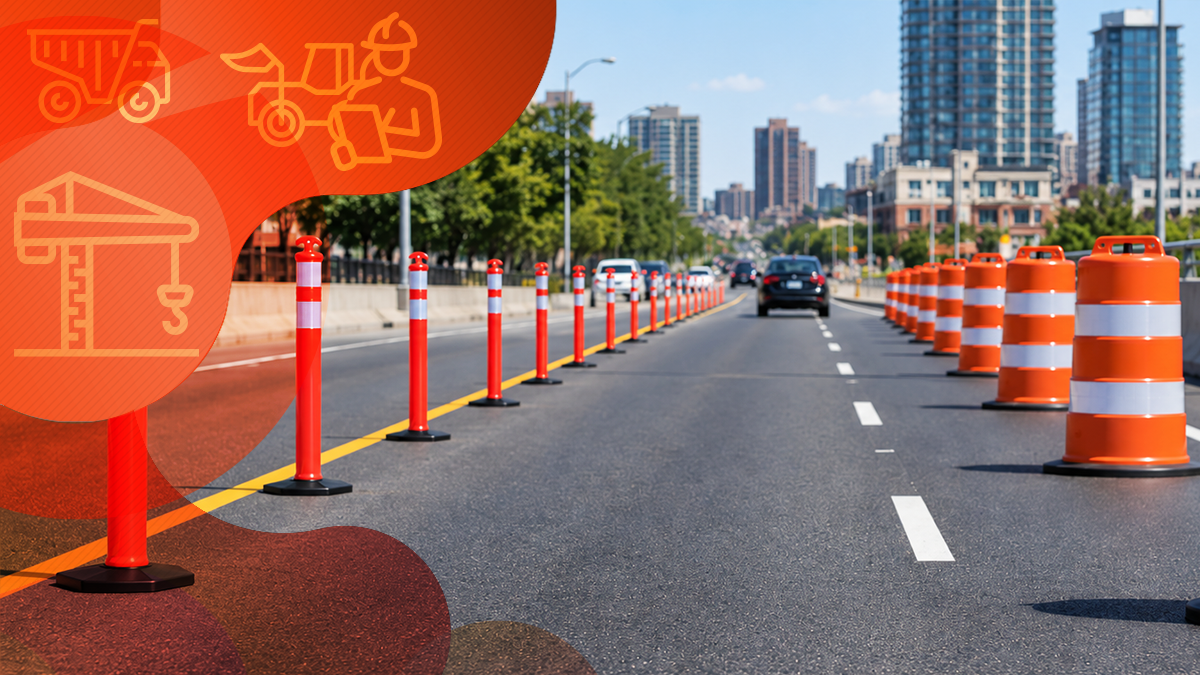
Drivers need to know at a glance how to proceed safely through situations where traffic patterns may differ from the norm. Options like traffic delineators and channelizers help facilitate this, but choosing the right tools and traffic safety equipment for the job is a must.
As terms, “delineator” and “channelizer” are often used interchangeably, but they are not exactly the same, even though a delineator can be considered a type of channelizer.
In this comprehensive introduction to channelizers vs. delineators, we’ll go over some of the key differences between the two.
Key Takeaways
- Channelizers are the broader category: traffic control devices that guide or physically restrict movement along a set path. Delineators are actually a specific type of tubular channelizer.
- Channelizers (barrels, panels, tubular types) are typically bulkier and designed to create a physical barrier or absorb impact.
- Delineators are lightweight, flexible posts meant to visually mark boundaries (edges, medians, curves) and they're built to rebound after a hit rather than block a vehicle.
- MUTCD compliance for delineators requires a minimum height of 36 inches, mostly fluorescent orange coloring, posts at least 3 inches in diameter, and specific reflective banding depending on height.
What Are Channelizers?
A channelizer is a traffic control tool meant to guide drivers or pedestrians along a pre-designated path. Most channelizers accomplish this by not only providing a visual guide to keep traffic on course but also by creating physical constraints that are difficult (if not impossible) to deviate from.
Channelizers are popular choices for controlling traffic through construction zones, past accident sites, or along event-related detours. There are also several key channelizer types to consider, including the following basic examples.
Traffic barrels
Also known as drum channelizers, traffic barrels are made of polyethylene or other high-density materials that absorb impact well. They’re used in tandem with weighted bases, sandbags, or a similar solution to keep them upright and in place. Most also feature bright colors, reflective strips, or both to boost visibility.
Channelizer panels
Another space-efficient option, channelizer panels are slim, rectangular panels mounted on heavy, weighted bases for stability. However, channelizer panels feature reflective material on all or most of their outer surface, making them a good fit for situations where visibility is a top priority.
Tubular channelizers
Tubular channelizers are slimmer and taller than traffic barrels or drums but serve a similar purpose – creating an impact-resistant barrier to keep traffic on track. However, their slimline designs make them ideal for situations where saving space is crucial.
What Are Delineators?
Traffic delineators are a specific type of tubular channelizer designed to help communicate the alignment and boundaries of a particular pathway to drivers and pedestrians. However, unlike other types of tubular channelizers, they are not necessarily permanently fixed to the ground.
Delineators are generally much more lightweight than other channelizer types, as they’re not meant to stop vehicles upon impact. Instead, they provide important visual guidelines that indicate the edges of roadways and work zones or highlight features like medians and curves. If a collision does occur, delineators cause minimal damage to vehicles and are often designed to rebound back into place automatically.
According to the MUTCD, a product must meet the following criteria to qualify as a regulation-compliant delineator:
- It must be at least 36 inches tall.
- The vertical portion of the product must be either all or mostly fluorescent orange in color.
- The posts must be a minimum of 3 inches in diameter.
- Delineators measuring less than 42 inches in height must include two 3-inch reflective bands positioned no further than 2 inches from the top of the post.
- Delineators measuring more than 42 inches high must include four 4-6-inch reflective bands. The stripes must alternate orange and white, with the topmost band being orange.
- Since they are not fixed in place, delineators must use weighted bases to ensure stability.
Since delineators have less visible surface than comparable traffic control items, the MUTCD further suggests that they should only be used when space restrictions don't allow for higher-visibility options.
Key Differences Between Channelizers and Delineators
Both delineators and other types of channelizers are useful traffic safety devices that keep roadways and work zones safe. Both play key roles in a comprehensive traffic control plan. However, it’s important to understand the differences between the two to ensure an effective choice. Here are some essential factors to consider.
Design
Delineators feature slim, flexible designs that minimize vehicle damage in case of impact. They’re also easy to install, versatile, and simple to maintain. Other channelizers (like traffic barrels) are generally bulkier, sturdier, and heavily weighted to keep them in place once installed, even if impact occurs.
Purpose
Delineators are for visually guiding traffic or clarifying important roadway features. Other channelizers are meant to actually block physical access if impact occurs, clearly define work zone boundaries, or redirect traffic.
Typical application
You’re most likely to see channelizer panels, traffic barrels, etc. in use near construction zones, temporary event setups, or emergency response sites – situations where definitively redirecting or separating traffic is essential. Delineators are more common in contexts that call for visual median indication, roadway edge marking, etc.
Channelizers vs. Delineators
| Factor | Channelizers (Barrels/Panels/Tubular) | Delineators |
| Category | Broad category of traffic control devices | A specific type of tubular channelizer |
| Weight/Build | Bulky, heavily weighted, sturdy | Lightweight, slim, flexible |
| Primary purpose | Physically block or redirect traffic | Visually guide traffic / clarify roadway features |
| Impact response | Absorbs or resists impact | Minimal vehicle damage, rebounds into place |
| Fixed or mobile | Often fixed with weighted bases | Not permanently fixed; uses weighted bases for stability |
| Best for | Construction zones, event detours, emergency response sites | Roadway edges, medians, curves, long-term marking |
| Usage timeframe | Short- to medium-term projects | Long-term / semi-permanent use |
| Space footprint | Larger footprint (except tubular types) | Low-profile, space-efficient |
| Visibility | High — especially barrels and panels | Moderate — relies on reflective banding |
Choosing the Right Traffic Safety Device
Which traffic safety devices are the right fit for you depends entirely on the specifics of your project. Let’s dive into a few fundamental factors to keep in mind as you evaluate your choices.
Usage timeframe
If you’re looking to keep traffic in check over the course of a roadwork project or during a limited-time event, heavy-duty channelizers are a better fit. They’re super durable, impact-proof, and weather-resistant, so they’re capable of standing up to pretty much anything.
Go for delineators if you’re thinking long-term use for applications like marking permanent hazards or highlighting important road features like edges, medians, and curves. They’re flexible and versatile, but they’re also made with indefinite semi-permanent use in mind.
Space concerns
Are you working within strict space constraints and in need of traffic safety equipment with a small physical footprint? Delineators provide terrific low-profile solutions that don’t take up a lot of room.
Or maybe you’re worried about space but still need a robust option capable of physically blocking vehicles and traffic. In that case, go for compact channelizer types, like vertical panels or fixed tubular channelizers.
Visibility needs
Like most traffic safety options, both channelizers and delineators have features to help maximize visibility. Both come in bright, safety-forward colors that contrast well against asphalt, snow, and other common backgrounds. Both typically feature additional reflective materials, like high-vis tape.
However, the sheer size of many channelizers – especially traffic barrels or channelizer drums – make them nearly impossible to miss. Channelizer panels are also terrific choices when max visibility is a requirement.
Budget concerns
If you’re working within a tight budget, delineators are often more cost-effective than other channelizers. The size, heft, and durability of more heavy-duty channelizers often mean a bigger upfront investment. However, they also eventually pay for themselves in performance when you really need to create a physical barrier.
FAQ
Can delineators stop a vehicle on impact?
No. Delineators are designed to minimize damage and often rebound back into position after a collision. If you need a device that can physically block or absorb vehicle impact, a heavier-duty channelizer like a traffic barrel is a better fit.
What height does a delineator need to be to meet MUTCD standards?
At minimum, 36 inches tall, with a post diameter of at least 3 inches. Reflective banding requirements change depending on whether the delineator is under or over 42 inches.
When should I use channelizer panels instead of barrels?
Channelizer panels are a good choice when you need high visibility but have limited space — they offer more reflective surface area per footprint than barrels do.
Are delineators cheaper than other channelizers?
Generally, yes. Their lightweight, simpler construction usually makes them more budget-friendly than bulkier options like traffic barrels or panels, though heavier-duty channelizers can pay off in situations requiring true physical barriers.
What's the best option for marking a roadway median long-term?
Delineators are typically the better fit for permanent or semi-permanent features like medians and curves, since they're built for durability in a low-profile, visual-guidance role rather than impact resistance.
Trust SONCO for Your Delineators and Traffic Control Supplies
When it comes to traffic safety, there really is an ideal tool for just about every possible purpose. Traffic delineators and channelizers are both solid choices for safely controlling and guiding traffic, but understanding which is most appropriate for your purposes is key – and having a partner who knows the equipment inside and out makes all the difference.
SONCO has the experience and product range to help you outfit your project with the right delineators, channelizers, and traffic control supplies, whether you need a handful of roadway markers or a full-scale setup for a long-term job. Our team can help you weigh durability, visibility, space constraints, and budget so you end up with equipment that actually fits the work ahead.
Ready to get started? Request a quote from SONCO today for delineators and traffic control supplies, and let us help you build a safer, more compliant worksite
Trend now

Temporary Fence Rental Lifespan: Tips to Make Your Fence Last Longer
Learn the storage habits that extend the lifespan of every panel.

How to Manage a Crowd at an Event: A Complete Guide for Event Managers
Learn how to manage a crowd at an event with proven strategies for planning, signage, barriers, staffing and more.

How to Install a Mesh Chain-Link Fence: Step-by-Step Guide
Learn how to install a mesh chain-link fence step by step.
Search for category
Request a quote now! 