Choose the Right Temporary Fence Base for Your Project
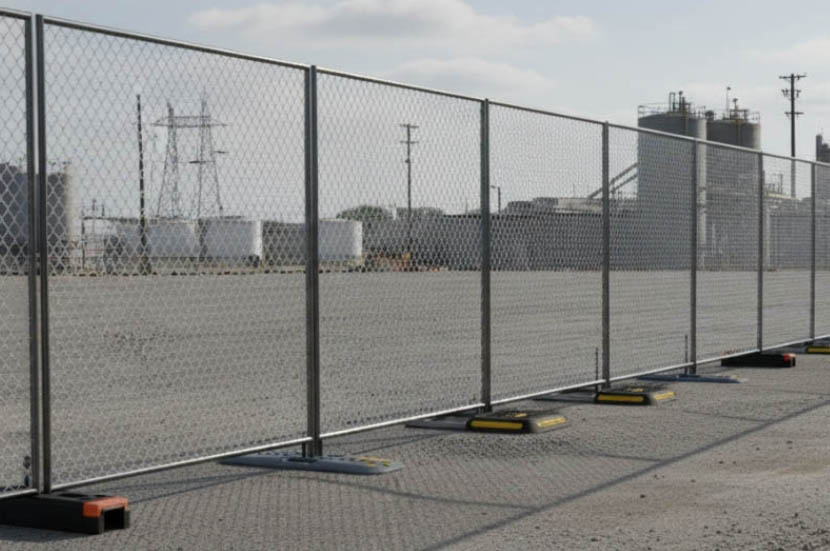
Temporary fence bases are selected based on site conditions, wind exposure, pedestrian traffic, and how long the fence will remain in place.
SONCO offers multiple temporary fence base options, from lightweight stands for standard installations to weighted bases designed for long-term projects and demanding environments.
Use the guide below to compare the most common temporary fence base styles and identify the best fit for your application.
Explore Temporary Fence Bases by Type
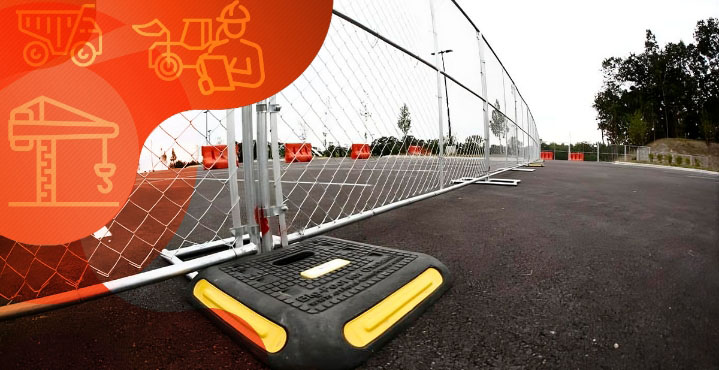
SONCO Anchor Bases are designed to support temporary fence panels under different site conditions. Compared to traditional metal stands and improvised ballast solutions, purpose-built base systems distribute weight more effectively, helping reduce panel movement and improving overall fence stability.
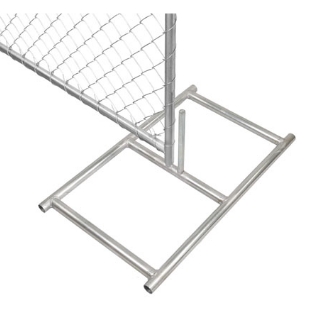
Metal Tube Stand
Traditional steel stand for temporary fence panels.
Suitable for controlled environments with limited wind exposure.
Easy to transport and deploy.
Commonly used for jobsites, storage areas, and temporary perimeters.
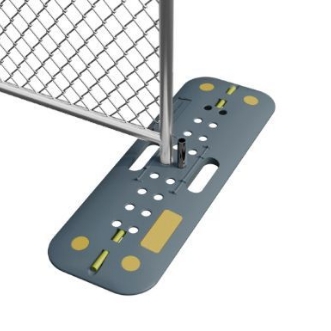
Anchor Stand
Low-profile design reduces trip hazards.
Suitable for pedestrian areas and standard fence installations.
Lasts up to 5 times longer than metal fence stands.
Commonly used at construction sites, events, and for rental fleets.
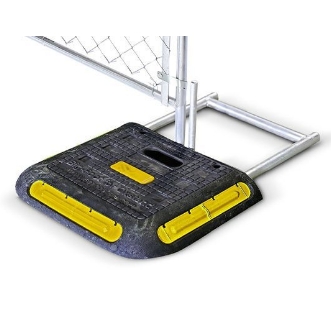
Anchor Weight
Adds ballast to improve fence stability.
Helps reduce panel movement in windy conditions.
One unit can replace over 10 sandbags.
Frequently used on projects requiring additional perimeter reinforcement.
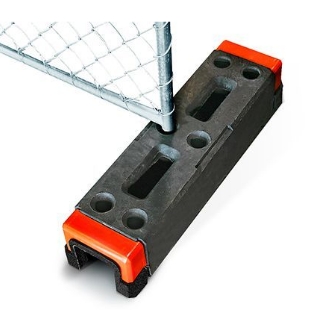
Anchor Block
Combines the functions of a stand and weight in a single product.
Designed for demanding site conditions.
Twenty times more durable than improvised concrete blocks.
Minimizes fence movement.
Factors That Affect Temporary Fence Base Selection
When comparing temporary fence bases, consider:
Expected wind exposure.
Pedestrian and vehicle traffic.
Fence length and perimeter layout.
Frequency of fence relocation.
Project duration.
Whether additional ballast or fence bracing will be required.
While sandbags may appear less expensive, they often require ongoing replacement as bags deteriorate over time.
For longer projects, our Anchor temporary fence bases often provide a lower lifetime cost because they are designed for repeated use, can be transferred between projects, and help reduce fence failures that may lead to service calls, perimeter repairs, or operational disruptions.
Temporary Fence Bases FAQs
1. What is the best temporary fence base?
A: The best temporary fence base depends on site conditions, wind exposure, project duration, and expected traffic. Metal tube stands work well for standard installations, while heavier bases like the Anchor Block provide additional stability for demanding environments.
2. Are temporary fence bases better than sandbags or concrete blocks?
A: Purpose-built temporary fence bases are generally easier to handle, more consistent, and reusable across multiple projects. They also reduce many of the maintenance and handling issues associated with improvised ballast solutions.
3. Can different temporary fence bases be used on the same perimeter?
A: Yes. Many projects use a combination of base types, depending on site conditions. Areas exposed to wind or frequent activity may require heavier bases, while lower-risk sections can use standard stands.
4. Which temporary fence bases are best for windy areas?
A: Heavier temporary fence bases, Anchor Weights, and fence braces are commonly used to improve stability in windy environments. The most appropriate solution depends on wind exposure and fence layout.
5. How many temporary fence bases do I need?
A: It depends on the base type and site conditions. Anchor Weights can often be installed on every other stand in low-wind areas or stacked for additional ballast in exposed locations. Contact our team if you'd like help determining the right quantity for your project.
6. Can temporary fence bases be reused?
A: Yes. Our Anchor fence bases are designed for repeated installation, removal, transport, and storage across multiple projects.