






How to Choose a Privacy Fence Screen: A Complete Buying Guide

Andrew Hession, September 16, 2026
Read more about the author


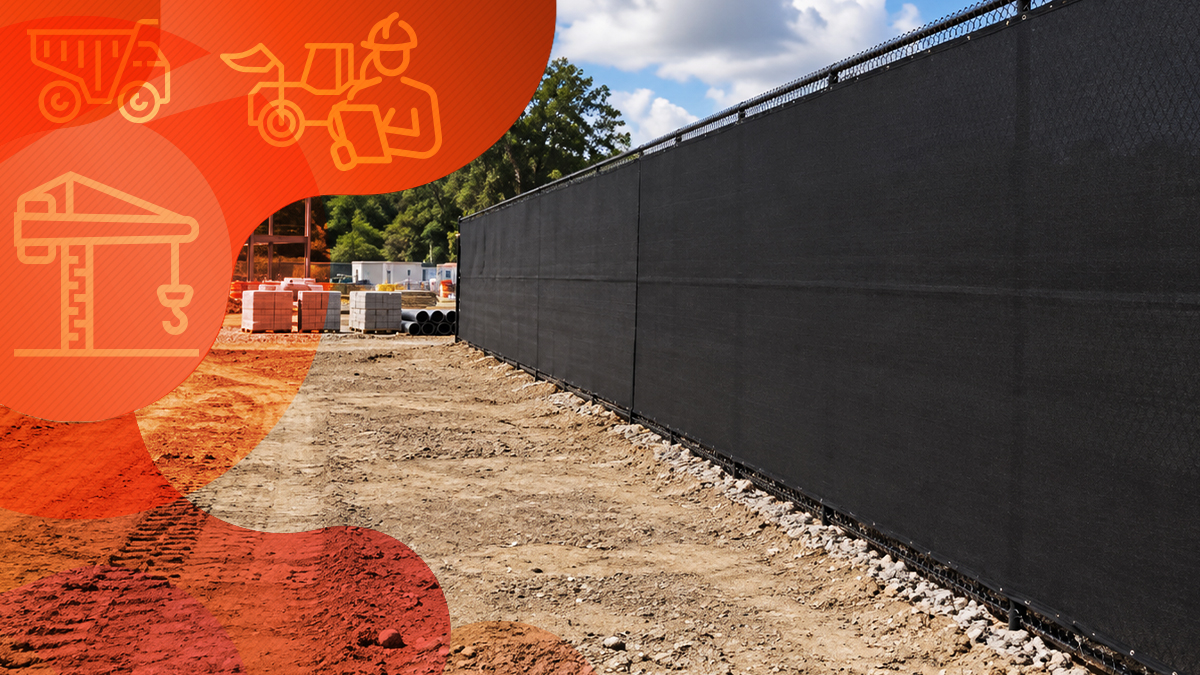
Choosing a fence screen isn't just about picking the highest privacy percentage on the label. The right screen for your site depends on several factors working together: the material, the opacity level, the dimensions of your fence, the wind conditions at your site, how the screen will be installed, how long it needs to last, and what you're actually using it for.
Whether you're screening a construction site, managing temporary fencing at an event, or setting up a long term perimeter for a commercial property, this guide walks through each of those factors so you can match a fence screen to your specific application, not just to a percentage on a spec sheet.
Key Takeaways:
- Choose a fence screen based on your site needs, not just the highest privacy percentage.
- HDPE and knitted mesh usually work best when you need privacy with airflow, while solid vinyl is better for maximum visual blockage.
- Measure fence length, height, gates, openings, and irregular sections before ordering.
- Look for reinforced edges, durable grommets, UV resistance, tear resistance, and consistent mesh construction for better long-term performance.
What Are Fence Screens Made Of?
The material a fence screen is built from affects everything else about how it performs, so it's worth understanding the main options before getting into opacity or sizing.
HDPE Fence Screens
High density polyethylene (HDPE) screens are woven from a durable plastic mesh. They're lightweight, UV resistant, and built for extended outdoor exposure, which makes them a common choice for temporary fencing and construction sites.
Because they're woven rather than solid, HDPE screens allow some airflow to pass through even at higher opacity levels, and they're available across a range of blockage percentages depending on how tightly the mesh is woven.
Knitted Mesh
Knitted mesh screens are flexible and lightweight, with a construction that promotes airflow and makes attachment straightforward. They tend to work well across long fence runs where flexibility and ease of installation matter.
Quality can vary quite a bit between products, largely based on the fabric weight and how the mesh is knitted, so it's worth checking those specs rather than assuming all knitted mesh performs the same.
Solid Vinyl
Solid vinyl screens block significantly more of the view than mesh options, which makes them the choice when minimal visibility is the priority.
That higher blockage comes with tradeoffs: less airflow and greater wind loading on the fence structure, sometimes at a higher cost. Vinyl installations also tend to require more careful setup given the added wind pressure.
| Material | Visibility | Airflow | Durability | Best For |
| HDPE mesh | Low to moderate | High | High | Construction and temporary fencing |
| Knitted mesh | Low to moderate | High | Moderate to high | Long fence runs |
| Solid vinyl | Very low | Low | High | Maximum privacy |
No single material is universally "best." The right one depends on your application and site conditions.
What Does Fence Screen Opacity Mean?
Fence screen opacity, sometimes listed as blockage percentage, refers to how much of the view through the fence is obstructed by the screen material. A screen labeled at 90 percent blocks significantly more visibility than one labeled at 80 percent, but higher isn't automatically the right call for every site.
80 to 85 Percent Blockage
This range reduces most direct visibility while maintaining substantial airflow. It's a solid middle ground for exposed outdoor locations where both privacy and ventilation matter.
90 to 98 Percent Blockage
Screens in this range provide significantly greater visual privacy, with much less visibility through the fence. Mesh constructions at this opacity can still allow some airflow, which helps offset wind load compared to a fully solid barrier.
100 Percent Blockage
A fully solid screen offers maximum visual blockage with little to no visibility through it. That level of coverage can also create substantially more wind load on the fence, so it calls for a closer look at fence stability and site conditions before installation.
Higher opacity provides more visual screening, but it can also reduce airflow and increase wind loading. The right level depends on your privacy requirements and site conditions, not on chasing the highest number available.
How Much Fence Screen Blockage Do You Need?
| Your Priority | Recommended Direction |
| Reduce visibility while maintaining airflow | 80 to 85 percent |
| Strong visual screening | 90 to 98 percent |
| Maximum privacy | 100 percent solid |
| Wind prone location | Favor breathable mesh |
What percentage privacy screen is best for a fence?
There is no single best percentage for every application. Mesh screens around 80 to 90 percent blockage provide a balance between visibility reduction and airflow, while higher opacity screens provide greater privacy but can create more wind resistance.
The right choice comes down to matching the percentage to your site's priorities.
How Wind Resistance Affects Fence Screen Selection
A fence screen changes the way wind interacts with the entire fence system, so wind resistance deserves its own consideration separate from material or opacity alone.
Several factors play into this: whether the screen is mesh or solid, how much airflow it allows, the pressure wind places on the fence, the fence's height and length, how exposed the site is, the installation method, and whether the fencing is temporary or permanent.
Mesh construction allows air to pass through the screen, which can reduce wind pressure compared with a solid barrier. However, no fence screen should be considered immune to wind related forces. Even breathable mesh adds surface area to a fence line, and that needs to be accounted for during planning and installation.
This is where fence stability becomes just as important as the screen itself. For temporary fencing in particular, pairing a screen with proper fence stabilizers helps offset the added wind load, and it's worth reviewing site specific stability planning alongside your screen selection.
How to Measure a Fence for a Privacy Screen
- Measure the Fence Length: Measure the actual fence line rather than automatically including end posts. Measure between the relevant posts or panels, and account for any gates or openings along the run.
- Measure the Fence Height: The screen should correspond to the height of the fence itself, so measure from the ground line to the top of the fence at the points where the screen will attach.
- Account for Gates and Openings: Gates, corners, fence transitions, irregular sections, and access points all need to be factored in separately from the main run. Overlooking these can leave gaps in coverage or make installation harder than it needs to be.
- Plan the Screen Sections: Long continuous runs can be more difficult to handle and install. Breaking a large fence line into manageable sections can make installation, tensioning, and replacement easier down the line.
How to Install a Fence Screen
After you’ve measured your fence and selected the right screen, it’s important to know how to install a privacy screen securely. A proper setup helps keep the material evenly tensioned, reduces strain on attachment points, and supports better long-term performance.
How do you attach a privacy screen to a chain link fence?
A privacy screen typically attaches to chain link fencing through grommets along the edges of the screen, secured to the fence with zip ties or similar fasteners at evenly spaced attachment points. Reinforced edges help the screen hold tension and resist tearing at those attachment points over time.
Installing a Screen on Chain Link Fence
Chain link installations rely on grommets, reinforced edges, and zip ties at consistent attachment points. Keeping tension even across the panel helps the screen perform well and last longer.
Installing a Screen on Temporary Fence
Temporary fence panels need appropriate attachment points along with a stable base. Fence clamps or connectors are often used to secure the screen, and stabilizers may be necessary depending on the site's wind exposure.
Freestanding Fence Screen Installation
Freestanding setups depend more heavily on weighted bases, stakes where the site allows them, and stabilizers. Ground conditions and wind exposure both play a role in how the installation should be approached.
What Features Should You Look for in a Quality Fence Screen?
Reinforced Edges
Reinforced edges keep the screen from tearing at attachment points, which is usually where the most stress is placed on the material.
Brass or Heavy Duty Grommets
Grommets provide the actual attachment points for the screen, and they should be spaced appropriately along the edges to distribute tension evenly.
UV Resistance
UV resistance matters for any screen left in outdoor conditions for an extended period, since sun exposure can degrade lower quality materials over time.
Tear Resistance
Tear resistance is especially important for construction sites, long term outdoor use, temporary fencing that gets moved and reinstalled, and high traffic environments.
Consistent Mesh Construction
Evenly constructed mesh holds up better over time and performs more predictably than mesh with inconsistent weaving or weak spots.
Appropriate Opacity
As covered above, more blockage isn't automatically better. The right opacity matches your site's actual needs.
Available Sizes
The screen should match your fence dimensions closely, without excessive material hanging below or above the fence line.
| Feature | Why It Matters |
| Reinforced edges | Keeps the screen from tearing at attachment points, where the most stress is placed on the material |
| Brass or heavy duty grommets | Provides attachment points spaced to distribute tension evenly along the fence line |
| UV resistance | Protects the material from degrading during extended outdoor exposure |
| Tear resistance | Holds up under construction site conditions, repeated moves, and high traffic environments |
| Consistent mesh construction | Performs more predictably over time, without weak spots from uneven weaving |
| Appropriate opacity | Matched to actual site needs rather than the highest available percentage |
| Available sizes | Fits fence dimensions closely, without excess material hanging above or below the fence |
Should You Choose a Standard or Custom Fence Screen?
Standard Fence Screens
A standard screen makes sense when you need basic visual screening, your fence dimensions are fairly typical, branding isn't a priority, and speed and simplicity matter more than customization.
Custom Printed Fence Screens
A custom printed screen is worth considering when you want branding on the perimeter, need logos represented, want to use the fence line as advertising space, need to communicate site information to the public, or simply want the perimeter to look more professional.
For sites where branding and screening go hand in hand, custom fence screens let you cover both needs at once, and the same approach extends to other custom printed products across a job site or event perimeter.
Where to Buy Fence Screens
Before choosing where to buy, it helps to evaluate a few things: material specifications, available opacity levels, the range of dimensions offered, the attachment system used, durability, whether customization is available, shipping availability, and whether the supplier offers application support for your specific site.
SONCO provides fence screen solutions for applications including temporary fencing, construction sites, events, and branded perimeter installations, with options that cover the material, opacity, and sizing considerations outlined throughout this guide.
Frequently Asked Questions About Fence Screens
What is a fence screen?
A fence screen is a fabric or mesh material attached to a fence to reduce visibility through it, commonly used on construction sites, temporary fencing, and commercial properties.
What is the best material for a fence privacy screen?
There isn't one best material for every situation. HDPE mesh and knitted mesh work well where airflow and lightweight handling matter, while solid vinyl suits applications where maximum blockage is the priority.
How do you measure a fence for a privacy screen?
Measure the fence length between relevant posts or panels, measure the fence height, and account for any gates, corners, or irregular sections separately from the main run.
Can fence screens be custom printed?
Yes. Custom printed fence screens allow for branding, logos, advertising, or site information to be displayed along the perimeter.
Can fence screens be used on temporary fencing?
Yes, fence screens are commonly used on temporary fencing for construction sites and events, though attachment points and stabilizers should be matched to the specific temporary fence system being used.
Choose the Right Fence Screen for Your Site
Selecting the right fence screen comes down to a sequence of decisions rather than one single choice.
Start with your application, select a material suited to it, determine the blockage level you actually need, factor in wind conditions, measure carefully, check for the attachment features that will hold up over time, and consider custom printing if branding matters for your site.
Whether you're screening a construction site, managing temporary fencing, preparing an event perimeter, or looking for a branded fence solution, choosing the right screen starts with understanding your site's requirements.
Explore SONCO's fence screen solutions to find an option that fits your application.
Trend now

Temporary Fence Rental Lifespan: Tips to Make Your Fence Last Longer
Learn the storage habits that extend the lifespan of every panel.

How to Manage a Crowd at an Event: A Complete Guide for Event Managers
Learn how to manage a crowd at an event with proven strategies for planning, signage, barriers, staffing and more.

How to Install a Mesh Chain-Link Fence: Step-by-Step Guide
Learn how to install a mesh chain-link fence step by step.
Search for category
Request a quote now! 