






High-Security Event Fence: How to Choose and Deploy One

Nick Criscuolo, September 24, 2026
Read more about the author


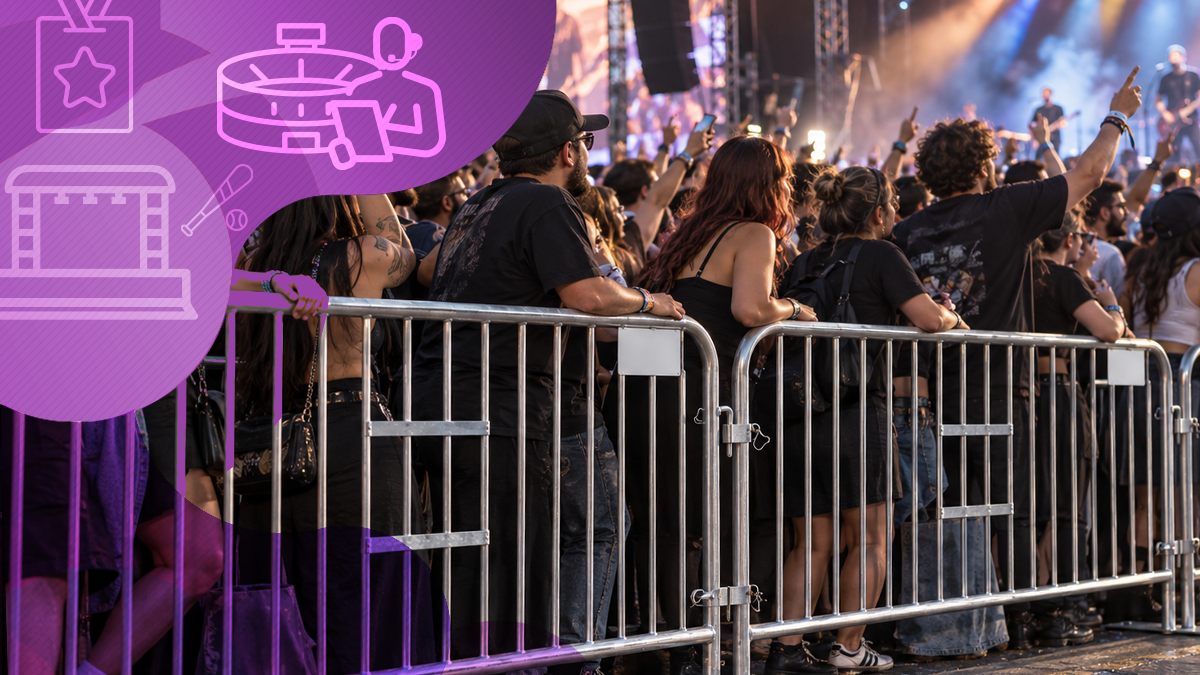
A high-security event fence is a temporary perimeter system built to resist deliberate breach, not just mark a boundary. It combines climb-resistant mesh, tool-resistant connections, heavy anchoring and controlled gates.
That gives security teams time to detect and respond to an attempted intrusion or crowd surge. For most high-profile events, this means an anti-scale fence panel system, layered with crowd barricades and vehicle barriers where a vehicle threat exists.
This guide explains what separates true high-security fencing from standard temporary fence. It covers how to design a layered perimeter, how to match specifications to event risk, and which compliance points to confirm before load-in.
Key takeaways
- High security means resistance, not height alone. A qualifying system resists climbing, tampering, pushing force and, with the right accessories, projectiles.
- Gates and joints fail before panels do. Specify connections and access points with as much care as the panels.
- Anti-scale systems fill the gap between standard chain-link and permanent fencing.
- Compliance is part of the specification. Fire egress, ADA access, wind loading and local authority requirements shape the layout.
What makes an event fence "high security"?
A fence is high security when it is engineered to defeat foreseeable, deliberate attempts to cross the line. A standard temporary panel marks a boundary and discourages casual entry. At an event, the fence is a security control, and failure has different consequences. A breach at a concert, rally or stadium can mean a crowd crush, an unscreened person in a restricted zone, or a direct security incident.
Security professionals typically evaluate an event fence against four resistance criteria:
- Climb resistance. Tight mesh openings and smooth surfaces remove finger and toe holds. The mesh should stop a gloved climber, not only a barehanded one. This is the principle behind the anti scale fence, a category built specifically for temporary high-security perimeters.
- Tamper resistance. Panels should be joined with bolted or tool-required connections rather than hand-release clamps. Anyone in a crowd can undo a clamp.
- Load resistance. The system has to hold under sustained lateral crowd pressure and wind. That depends on base design, bracing and panel-to-panel rigidity.
- Visibility control. Security staff need sight lines through the fence, and sometimes need concealment from the crowd. Mesh density and privacy screens balance the two.
| Feature | Standard temporary fence | High-security event fence |
| Primary purpose | Boundary definition | Physical access control |
| Climb resistance | Low (open diamond mesh) | High (tight, anti-climb mesh) |
| Panel connections | Clamps | Bolted or tool-secured |
| Base and anchoring | Standard feet | Heavy steel baseplates, optional braces |
| Crowd-pressure performance | Limited | Designed for sustained load |
| Typical use | Construction sites, low-risk events | Concerts, stadiums, rallies, VIP and government events |
Some systems can also provide an added level of protection against thrown objects. Tight mesh helps create a more secure perimeter by reducing openings and making it more difficult for objects to pass through the fence.
High-security fencing is designed to strengthen the perimeter by helping deter unauthorized access and making intrusion more difficult. When combined with appropriate access control and monitoring measures, it can serve as an important part of a broader site security strategy.

Designing a layered event perimeter
Professionals think in zones, not in a single fence line.
- Outer perimeter. This defines the event footprint and directs arrivals to screening. Standard or welded panels usually suffice unless the threat assessment says otherwise.
- Screening and access points. Most breaches happen at gates and gaps, not mid-panel. Keep entry points few, control approach lanes with barricades or stanchions, and make sure every gate matches the security rating of the fence around it. Clear lane markings and event signage help crowds understand boundaries before they reach a gate.
- Inner restricted zones. These cover backstage, VIP areas, command posts and equipment compounds. This is where an anti-scale system is most often justified.
- Vehicle standoff. Keep vehicles away from crowd concentrations using rated barriers. Approach routes and staging areas are best planned alongside traffic flow in and around the venue.
Fencing works best as one element of a broader plan that also covers queuing, signage and staffing, the same elements that shape how to manage a crowd at an event. At larger venues, the products chosen for stadium crowd control determine how safely the whole operation runs.
Ground conditions matter as much as panel choice. Asphalt, turf and gravel each call for different fence bases, and the anchoring method directly affects how the line performs under load.
How to match fencing to event type
| Event type | Primary risk | Recommended approach |
| Concerts and festivals | Crowd pressure, gate-crashing | Anti-scale on backstage and production zones, certified barricades at the pit, standard panels for the outer line |
| Stadiums and arenas | Breaches at gaps and gates | Continuous perimeter, few well-controlled entry points, heavy-duty gates |
| Political rallies, government and VIP events | Deliberate intrusion, projectiles, vehicles | Anti-scale with braces, privacy screens for sightline control, rated vehicle barriers |
| Parades and public spaces | Pedestrian flow, vehicle access | Channeling barricades and vehicle standoff |
| Recurring venue events | Consistency, cost | A standard specification across bookings, with anti-scale reserved for elevated-risk events |
The higher the value of what's inside the perimeter, and the more predictable the threat, the higher the specification should be. Barricade choice also shifts across metal barricade applications, from events to public spaces and construction. Practical lessons from large-scale event professionals complement the physical specification on the operational side.
Compliance and safety considerations
Security fencing has to work within life-safety rules. Confirm these with the authority having jurisdiction (AHJ), venue management and your insurer before finalizing a plan:
- Fire code and egress. Secured perimeters must still provide code-compliant emergency exits and emergency vehicle access. Local requirements set gate spacing and width.
- ADA accessibility. Public-facing gates and screening lanes must be accessible.
- Wind loading. Taller panels and privacy screens catch wind, so braces, ballast and stabilizers belong in the specification. Wind resistance is as important as opacity when choosing a privacy fence screen.
- Vehicle barrier ratings. Fence panels do not carry vehicle ratings. If you specify anti-ram barriers, verify the crash-test rating and how it was tested. Understanding what an anti ram vehicle barrier is, and which certifications apply, prevents over-claiming protection.
- Crowd safety. Razor wire, barbed wire and sharp toppers create injury and liability risks at public events. Choose systems that resist climbing through design, not through harm.
- Insurer and law enforcement requirements. Large or high-profile events often carry additional protocols.
Typical high-security event fence types
Event teams rarely rely on a single product. They combine fence types by zone and risk, each with a distinct role.
| Fence type | Role in the perimeter | Typical placement |
| Anti-scale (anti-climb) panel systems | Primary delay layer against climbing and forced entry | Restricted zones, VIP and government perimeters |
| Standard temporary panels | Boundary definition and low-risk coverage | Outer perimeter, staging areas |
| Metal and concert barricades | Crowd flow and pressure management | Front of stage, queue lanes, entry approaches |
| Water-filled and anti-ram barriers | Vehicle mitigation | Approach roads, standoff points |
| Gates, braces and screens | Access control, reinforcement, sightline control | Entry points and high-wind or high-pressure lines |
- Anti-scale panel systems are the core of a high-security line. Tight diamond mesh, bolted connections and steel baseplates create a rigid barrier that is very difficult to climb or push over, which is why they appear at courthouses, government sites and high-profile events.
- Standard temporary panels remain the workhorse for outer boundaries. Many planners pair chain-link fence panels or welded wire panels on the outer line with anti-scale on the inner one, and proper installation, as covered in setting up a temporary chain-link fence panel, is what makes that outer layer reliable.
- Barricades manage flow rather than secure a perimeter. Concert barricades hold the highest-density lines, and third-party validation matters here, as when a concert barricade achieved Clark
- Event Safety certification. Layout affects performance too, which is why setting up metal barricades correctly matters as much as the hardware. Broader event fencing options round out this layer.
- Vehicle barriers address the threat fences cannot. Where a vehicle-ramming scenario is credible, planners add tested water barriers at approaches, and some configurations combine a barrier with a fence topper for added height.
- Accessories complete the system. Fence gates define controlled entry, perimeter braces add stability under wind or crowd pressure, and privacy screens control sightlines between security staff and the crowd.
High-security event fence FAQs
What is a high-security event fence?
A high-security event fence is a temporary perimeter system designed to resist deliberate breach. It typically combines anti-climb mesh, bolted panel connections, heavy steel bases and controlled gates. Unlike standard temporary fence, it is built to withstand climbing, tampering and crowd pressure.
What is the difference between anti-scale and anti-climb fence?
They describe the same category. Both refer to fencing engineered with tight mesh and limited handholds and footholds to prevent climbing. The terms are used interchangeably.
How tall should a high-security event fence be?
Most high-security applications start at 6 to 8 feet, with taller configurations for VIP or high-risk perimeters. Height alone doesn't determine security. Mesh density, connections, bases and bracing matter as much. Confirm the exact height and configuration against your threat assessment and product specifications.
Can a temporary fence stop a vehicle?
No. Standard and anti-scale fence panels are not crash-rated. Where vehicle threats exist, use tested anti-ram or water-filled barriers at approach points, and verify their crash-test rating.
What is the best fence for a concert or festival?
Most concerts use a layered approach. Standard panels handle the outer perimeter, anti-scale fence protects backstage and production areas, and certified concert barricades hold the front-of-stage line. The right mix depends on crowd size and risk level.
How quickly can high-security event fencing be installed?
Bolt-together panel systems on freestanding baseplates require no ground penetration, so they deploy much faster than permanent fence. Actual time depends on perimeter length, crew size and site conditions.
Plan your event perimeter with SONCO
For 50 years, SONCO has supplied perimeter and crowd control equipment to event organizers, venues, contractors and public sector teams, and the customer reviews reflect that experience.
Teams that want help matching temporary fence type, bases, gates and accessories to an event's risk profile can request a quote and work through the specification before load-in.

Trend now

Temporary Fence Rental Lifespan: Tips to Make Your Fence Last Longer
Learn the storage habits that extend the lifespan of every panel.

How to Manage a Crowd at an Event: A Complete Guide for Event Managers
Learn how to manage a crowd at an event with proven strategies for planning, signage, barriers, staffing and more.

How to Install a Mesh Chain-Link Fence: Step-by-Step Guide
Learn how to install a mesh chain-link fence step by step.
Search for category
Request a quote now! 