


Best Privacy Screen Fabric for Fences: Vinyl, Polyester, HDPE & Knitted Mesh

Andrew Hession, October 14, 2026
Read more about the author


Many buyers assume the most opaque screen is automatically the best one. In practice, that is rarely true. A near-solid screen blocks more of the view, but it also catches more wind, puts more strain on posts and rails, and can shorten the life of the fence itself.
Choosing a privacy screen fabric means balancing six things: privacy, airflow, wind resistance, durability, appearance, and print quality. No single material wins on all six. Material type, blockage percentage, installation environment, and finishing details (hems, grommets, edge reinforcement) all shape the result.
This guide compares vinyl mesh, polyester, HDPE, and knitted fabric so you can match the material to your site instead of chasing one universal winner.
Key Takeaways
- HDPE privacy screen fabric is often the most balanced choice for long-term outdoor privacy because it combines UV resistance, airflow, and moisture resistance.
- Knitted mesh is especially useful in windy areas because its breathable construction helps reduce wind pressure on the fence.
- Vinyl and polyester are worth considering when custom graphics, branding, and a polished display surface are central to the purchase.
- Higher privacy percentages improve visual screening but also raise wind loading. Choose opacity based on the site, not by automatically picking the highest number.
Understanding Screen Fence Fabric
Fence screening material is a flexible panel attached to chain-link, temporary, perimeter, or construction fencing. It adds privacy, reduces dust and debris, softens wind, hides activity, or carries branding and graphics. Fence screens come in a wide range of materials, sizes, and finishes, which is why the fabric matters so much.
It differs from other products in a few ways:
- Solid tarps block nearly everything, including air, so they act like sails in wind.
- Rigid fence slats are inserted into the fence links and are more permanent, but harder to install, remove, and print on.
- A privacy mesh fence screen is designed with controlled openness, so it blocks most of the view while letting some air and light through.
You will often see a privacy percentage (or blockage percentage) listed. It describes roughly how much of the view the fabric blocks. An 85% screen blocks about 85% of the view and leaves the rest as openness for air and light. It is a useful guide, not a guarantee, as covered later.
HDPE Privacy Screen Fabric: Best All-Around Outdoor Option
High-density polyethylene (HDPE) is one of the most widely used materials for flexible outdoor privacy screens. It resists moisture and can be UV-stabilized, so it holds up to sun, rain, and temperature swings better than many alternatives. If you are comparing ready-to-hang options, a fence privacy screen built on a breathable mesh is a good starting point.
Why breathable construction matters. HDPE screens are typically made with a breathable structure. On wind-exposed chain-link fencing, that airflow reduces the pressure pushing against the panel and the fence behind it.
What GSM tells you. Fabric weight, measured in GSM (grams per square meter), is one quality signal. Heavier fabric often feels more durable, but weight alone does not guarantee performance. Check it alongside UV stabilization, stitching, and edge finishing.
Common use cases:
- Backyards and residential fences
- Construction areas and jobsites
- Tennis courts and sports facilities
- Storage and equipment yards
- Utility and mechanical screening, including data center perimeters, where mesh can hide equipment from view while still allowing airflow
Knitted vs. Woven Fence Screen Fabric
The difference starts with how the fabric is made. Woven fabric interlaces threads at right angles, like a traditional textile. Knitted fabric loops threads together, which gives it more stretch and a different structure.
Knitted fabric is commonly valued for two reasons: it resists unraveling if cut or damaged, and it allows air to pass through. That breathability reduces wind pressure, which is why knitted mesh is popular for exposed fences.
The trade-off is that breathable mesh cannot deliver complete blackout privacy. Some light and visibility will always pass through.
Callout: Nighttime lighting. Even high-blockage screens can reveal silhouettes when strong lights sit behind them. If privacy matters after dark, evaluate the screen in nighttime conditions, not just in daylight.
Vinyl Fence Screen: When Appearance and Printing Matter Most
“Vinyl” can mean different things in the market. Some products are vinyl-coated mesh, which keeps openness for airflow. Others are closer to banner-style PVC or vinyl screens with a more solid face. Always check the product specs rather than assuming.
Vinyl is a strong fit for commercial applications where looks matter:
- Jobsite branding
- Sponsored events
- Sports venues
- Retail barriers
- Temporary fencing
Durability depends on more than the face material. Look at reinforced hems, grommet quality, ink durability, and how much wind the installation will face. And avoid assuming every vinyl product is fully solid, because mesh openness varies widely by product.
Polyester Fence Screens: Best for High-Definition Graphics?
Polyester is a print-friendly textile, often chosen for rich color and sharp image detail. When the artwork is the point of the screen, it is a serious contender, especially for a custom fence screen carrying logos, event graphics, or full-color branding.
Before buying, verify:
- Outdoor UV performance
- Water resistance
- Seam construction
- Suitable mounting hardware
Compared with vinyl, polyester tends to feel more fabric-like, while vinyl often gives a more structured banner look. Neither is better in every case. The right pick depends on the finish you want and how long the screen will stay outdoors.
At-a-Glance: Vinyl Mesh vs. Polyester vs. HDPE vs. Knitted Fabric
| Fabric type | Best for | Main advantage | Printing suitability |
| Vinyl mesh | Branding, events, commercial sites | Clean, professional appearance; supports vivid graphics | Excellent, especially for detailed graphics |
| Polyester | Shorter-term branded displays, banners | Smooth surface and sharp image reproduction | Excellent |
| HDPE | Residential privacy, construction, windy sites | UV-resistant, breathable, moisture-resistant | Good to very good, depending on coating and print method |
| Knitted HDPE | Privacy with airflow | Resists unraveling, flexible, lower wind “sail” effect | Good for logos and simpler branding |
How Much Privacy Do You Need?
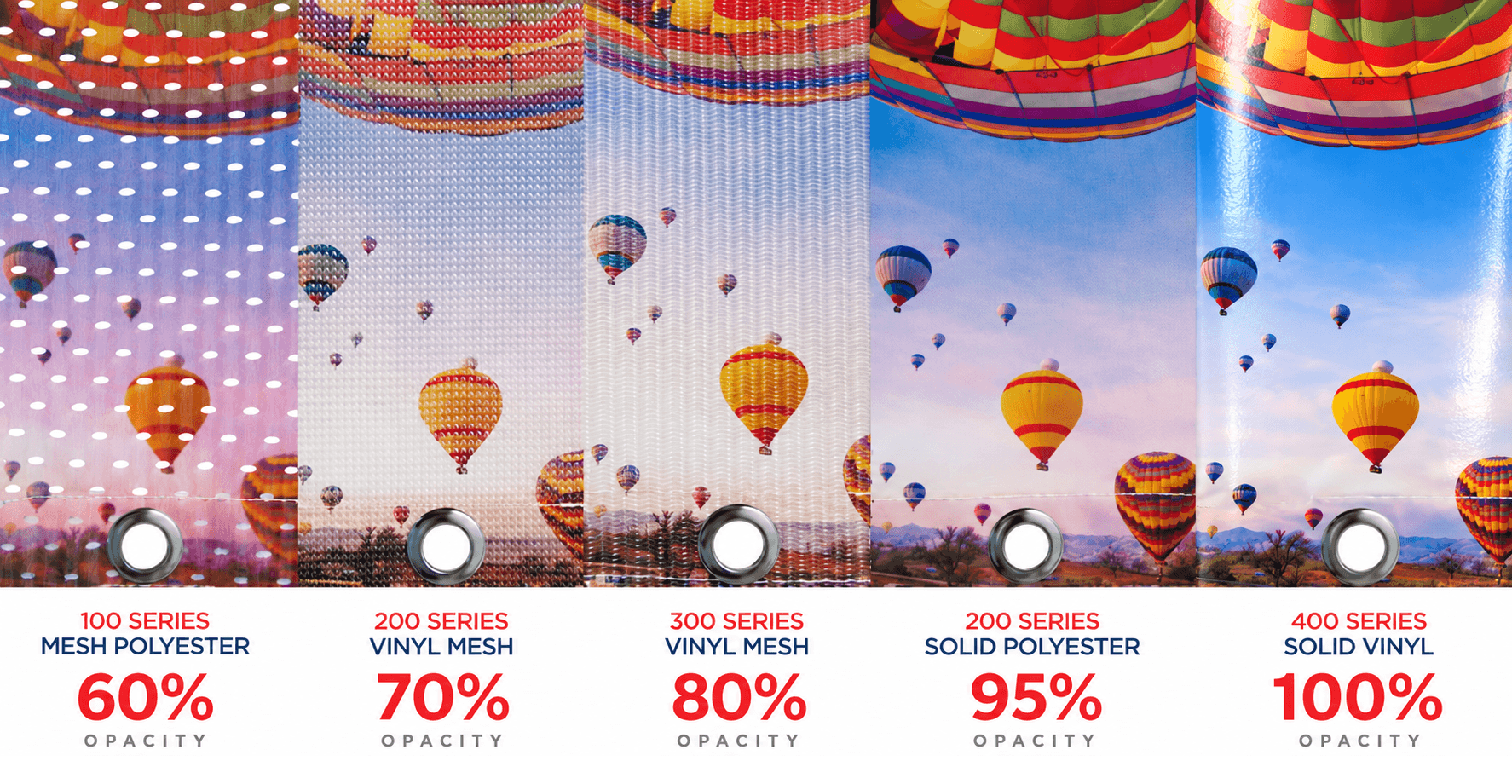
Choose privacy based on your site: 80% offers good screening and airflow for windy or exposed areas, 85% is a balanced all-purpose option, 90% delivers stronger concealment with higher wind load, and above 90% is best for sheltered locations with a sturdy fence.
More blockage means more wind force, so higher-opacity screens may require stabilizer kits to support the fence in wind. Also consider your main goal, fence strength, material, UV resistance, finishing, measurements, print needs, and both daytime and nighttime visibility.
For more detail, see this complete buying guide for privacy fence screens.
Recommended Material by Application
| Application | Recommended material |
| Backyard privacy | UV-stabilized knitted HDPE, usually mid-to-high blockage |
| Windy perimeter fencing | Breathable HDPE or open mesh rather than solid material |
| Construction sites | Durable HDPE privacy mesh with reinforced edges |
| Events and sponsor branding | Vinyl mesh or outdoor-rated polyester, depending on the graphic finish |
| Premium custom printing | Matte-finish printable mesh or polyester when detailed reproduction is the priority |
| Maximum visual concealment in sheltered areas | Higher-opacity material, subject to fence and wind-load suitability |
On construction sites, a consistent look matters as much as the material. Branded custom privacy screens for construction jobsites keep the site clean and professional while hiding the work behind them. For events, the same printing logic applies to barricade covers, which carry branding and signalization across venues.
The Best Fence Screen Balances Privacy, Airflow, and Durability
The best fabric fence screen is the one that matches your site’s exposure, privacy needs, expected lifespan, and visual requirements. HDPE and knitted mesh are strong all-around choices where privacy and airflow must coexist. Vinyl and polyester earn their place when branding and print quality lead the decision. And a higher privacy percentage is only a benefit if your fence and your wind conditions can handle it.
Looking at the whole package (material, blockage level, hems, grommets, and installation) is what turns a fabric into a screen that lasts.
Ready to choose the right screen for your fence? Browse SONCO’s full range of fence screens or request a quote to talk through your site and get a screen matched to your needs.

Trend now

Temporary Fence Rental Lifespan: Tips to Make Your Fence Last Longer
Learn the storage habits that extend the lifespan of every panel.

How to Manage a Crowd at an Event: A Complete Guide for Event Managers
Learn how to manage a crowd at an event with proven strategies for planning, signage, barriers, staffing and more.

How to Install a Mesh Chain-Link Fence: Step-by-Step Guide
Learn how to install a mesh chain-link fence step by step.
Search for category
Request a quote now! 