






Tips for Event Managers: Top Lessons from Large-Scale Events Professionals

Nick Criscuolo, September 1, 2026
Read more about the author


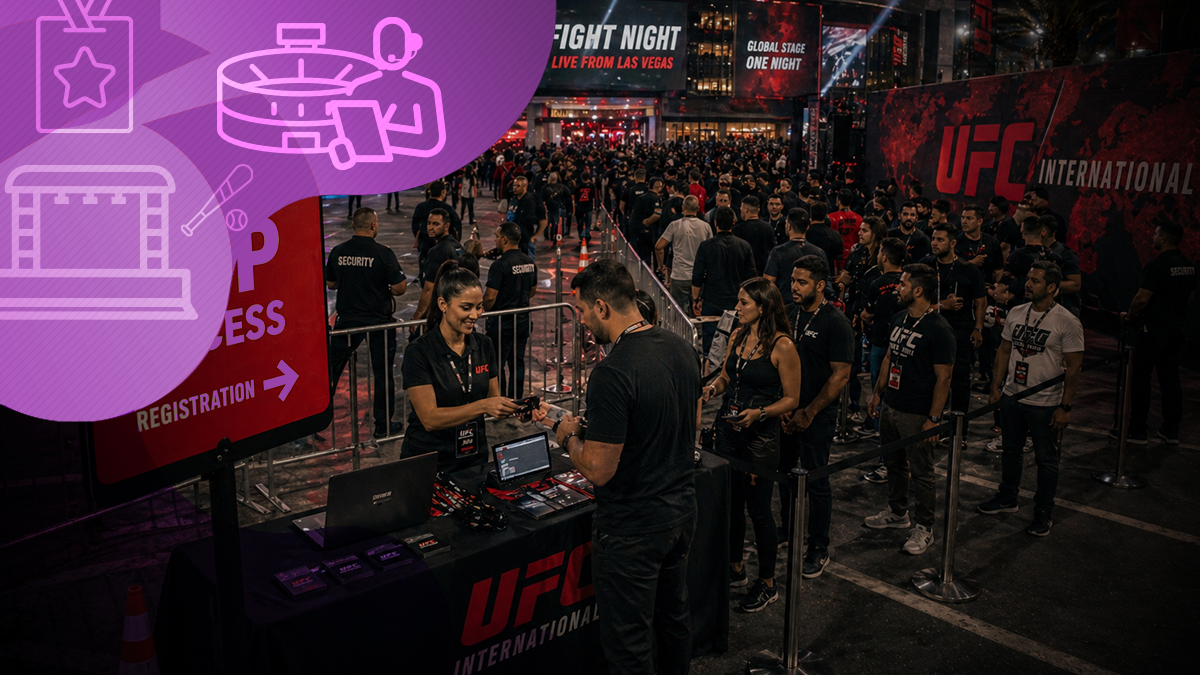
Large-scale events rarely fall apart because of one dramatic mistake. Nobody forgets to book the venue. Nobody skips the budget.
What actually breaks an event is smaller than that: a floor plan that looks clean in a design file but funnels 4,000 people through a 12-foot gap, a vendor who quoted the lowest price and then went dark two days before load-in, a schedule with zero room to absorb a 40-minute delivery delay.
None of these show up on a checklist. They show up on event day, when there's no time left to fix them.
What are the most important lessons for event managers planning large-scale events? Experienced professionals plan for three things newer managers often overlook: how quickly they can respond when something changes, how the event continues operating under pressure, and how today's mistakes become tomorrow's institutional knowledge.
It's not about predicting everything. It's about deciding, in advance, which failures you can absorb and which ones you can't.
That distinction is what this article is built around.
Key Takeaways
- Use the budget as a decision-making tool, not a spending ceiling. The best festival and event managers revisit it constantly to decide where flexibility exists.
- Build timelines with recovery time, not just deadlines. Vendor delays, permit hiccups, and weather don't respect your Gantt chart.
- Design layouts around how people actually move, not how the space looks in a rendering.
- Choose vendors on reliability and responsiveness, not the lowest line-item price. Your suppliers are part of your risk profile.
1. Use the Budget as a Planning Tool, Not Just a Number
Most planning guides stop at "create a budget." That's step one, not the lesson.
Research on festival management backs this up directly. A study of 61 festival managers across 40 festivals found that budgets were particularly important for planning and coordination purposes, not just for tracking spend after the fact. In other words, the managers who ran the smoothest events treated the budget as an active coordination tool throughout planning, not a document you check in on at the end.
In practice, that means:
- Establishing the budget early, before scope decisions lock you in.
- Separating fixed costs (venue, insurance, permits) from flexible ones (décor, signage upgrades, staffing tiers).
- Identifying which line items are non-negotiable because they're tied to safety or operations, such as barriers, crowd-control equipment, and emergency staffing, versus which ones are aesthetic.
- Building a contingency reserve that's actually protected, not the first thing raided when another department goes over.
Revisiting the budget every time scope changes, not just at kickoff and post-event reconciliation.
The experienced question isn't "Can we afford this?" It's "What happens if we don't spend money here?" A cut to signage doesn't just save money; it shows up later as confused attendees and overwhelmed staff.
A cut to crowd-control equipment doesn't just save money; it shows up later as a bottleneck nobody can clear in time. Every budget line is really an operational bet, and the managers who run large events well know which bets they can't afford to lose.
2. Build a Timeline With Recovery Time, Not Just Deadlines
A timeline that assumes everything happens exactly on schedule isn't a plan. It's a wish list with dates attached.
Experienced event managers build recovery time into the schedule the same way structural engineers build in load tolerance: not because they expect failure, but because they know exactly what happens if they don't plan for it. That recovery time needs to cover:
- Vendor lead times that run long, especially for custom fabrication or specialty rentals.
- Permits and approvals that get kicked back for revisions.
- Shipping and delivery windows that miss by hours, not minutes.
- Installation and site inspections that reveal a problem nobody caught on paper.
- Staff training sessions that need a second pass.
- Signage installation, which almost always happens later than planned because it depends on everything else being finished first.
- Weather delays, last-minute layout changes, and teardown, which is just as easy to underestimate as setup.
A timeline without recovery time isn't a realistic event timeline. It's a best-case scenario with a schedule attached to it. And best-case scenarios are exactly what you shouldn't be planning around when thousands of attendees, dozens of vendors, and a fixed opening time are all converging on the same day. This is also where safety and crowd-control equipment deserves its own buffer: it needs to be delivered, inspected, and staged well before the operational window opens, not squeezed in the night before doors.
3. Design the Event Around How People Move, Not Just How the Space Looks
This is one of the areas where the gap between a good-looking plan and a good-operating plan shows up fastest.
Industry guidance on floor plan design makes the point clearly: strong layouts are built around the objectives of the event and how attendees actually move through the space, not just around what looks impressive in a rendering. A floor plan is a hypothesis about behavior. If that hypothesis is wrong, you find out in real time, with a crowd already in the building.
Identify Natural Traffic Patterns
Before finalizing any layout, walk through it as an attendee would and ask:
- Where will people enter, and how many will arrive in the first 15 minutes?
- Where will they naturally stop: merchandise, food, photo moments?
- Where will queues form, and do those queues have room to grow without blocking a thoroughfare?
- Where will different traffic flows intersect?
- Where will people need information, and is that exactly where you've placed staff or signage?
Design for Peak Traffic, Not Average Traffic
An average-traffic layout fails at the exact moments that matter most: doors opening, headliner arrival, intermission, halftime, event conclusion, and critically, emergency situations. If your layout only works when movement is evenly distributed, it will fail during every moment attendees actually remember.
Don't Separate Layout From Crowd Control
Here's the lesson that separates an experienced operator from a first-time planner: a floor plan tells people where you want them to go. It doesn't make them go there. That's the job of physical infrastructure, including crowd-control barriers, stanchions, and temporary event fencing, working together with signage to turn an intended flow into an actual one.
Treat these products as part of the layout itself, specified at the same time as the floor plan, not added afterward as an afterthought once the design is "done."
4. Choose Vendors for Reliability, Not Just Price
Every event manager compares quotes. The more experienced lesson is understanding that your vendors are part of your operational risk profile, not just a line item.
Guidance on risk mitigation in large meetings and events highlights vendor selection, contracts, and contingency clauses as central to managing disruption, a reminder that reliability isn't a soft factor. It's a risk-management decision with real consequences if you get it wrong.
When evaluating suppliers, weigh:
- Track record with events of comparable scale.
- Responsiveness: how fast do they answer when a change comes in?
- Willingness and ability to accommodate last-minute adjustments.
- Delivery reliability, not just quoted delivery dates.
- Whether they have real backup capacity if their primary solution fails.
- Contract terms, including cancellation and force majeure language.
- Insurance and liability coverage appropriate to the role they play.
- Experience with events similar in size, format, or risk profile to yours.
- What emergency-day support actually looks like: a phone number that gets answered, or a form that gets filed.
A vendor who saves you money but creates a crisis on event day isn't actually the cheaper option. The cost just moved from your budget spreadsheet to your event-day stress level, and it usually shows up bigger than the original discount.
Companies that specialize in event safety and crowd-control equipment are a useful benchmark here: the ones worth working with are evaluated on reliability under pressure, not just catalog pricing.
5. Build an Event Network Before You Need It
"Join industry associations" is common advice, and it undersells the point. The real lesson is that experienced event managers build relationships before something goes wrong, not while it's happening.
A strong professional network gives you access to:
- Industry knowledge that hasn't made it into a blog post yet.
- Peer experience from people who've run a similar event at a similar scale.
- Vendor recommendations from managers who've already been burned or impressed.
- Safety practices that evolve faster than official guidance documents.
- Operational benchmarks for staffing ratios, timelines, and layouts.
- Regulatory information specific to your venue type or jurisdiction.
- Professionals who have already solved the exact problem you're staring at.
- Don't Build Your Network During a Crisis
The person who can help you solve a problem at 10 a.m. on event day is someone you should have met months earlier. Cold outreach in the middle of a crisis rarely gets a fast answer. A relationship built over a year of industry events, association meetings, or shared projects gets you a phone call that's answered on the first ring.
5. Have a Plan B for the Event's Most Likely Failure Points
Contingency planning fails most often when it's written as one giant document nobody reads until it's too late to be useful. It works when it's built around specific, likely failure points with predefined responses attached.
A contingency plan is only useful if the team knows three things without having to ask: who decides, who communicates, and who executes. A binder full of scenarios is worthless if the person standing at the gate doesn't know whether they're authorized to redirect the line themselves or has to wait for approval that takes ten minutes to arrive.
This is also where physical infrastructure earns its place in the contingency plan itself. Water barriers, temporary fencing, and crowd-control barriers aren't just layout tools; they're the equipment that lets you execute a contingency in real time, redirecting flow the moment conditions change instead of improvising with volunteers and rope.
Contingencies Around Real Risks
| Potential issue | Possible contingency |
| Severe weather | Alternate schedule, covered area or location |
| Vendor cancellation | Backup supplier |
| Equipment failure | Replacement equipment |
| Traffic disruption | Alternate access route |
| Power failure | Backup power |
| Staff shortage | Cross-trained personnel |
| Crowd surge | Revised access and crowd-control procedures |
| Communication failure | Secondary communication system |
6. Design for Accessibility Before You Design for Convenience
Accessibility gets treated as a compliance checkbox far too often. Experienced managers treat it as an operational design consideration from the start, because an inaccessible plan doesn't just exclude people. It creates the exact kind of bottlenecks and confusion that make an event harder to run for everyone.
That means planning for:
- Accessible entrances and clearly marked routes to them.
- Accessible viewing areas that aren't an afterthought tucked behind a sound tower.
- Signage and wayfinding that work for attendees who don't already know the venue.
- Queue design that doesn't force accessible attendees into the longest, most physically demanding line.
- Restrooms, seating, and rest areas positioned along the actual paths people walk.
- Multilingual communication where the audience calls for it.
- Staff who are briefed on accessibility needs, not just handed a radio.
- Emergency evacuation routes that work for attendees with mobility, sensory, or cognitive differences.
Accessibility isn't only about getting people into the venue. It's about making it possible for them to navigate and participate independently, without needing to ask for help at every turn. Clear, consistent event signage does more of this work than almost any other single investment, which is why it deserves the same design attention as the floor plan itself.
7. Plan the Event You Have to Operate, Not Just the Event You Want to Deliver
A beautiful floor plan isn't necessarily a good operational plan. Before finalizing any design, an experienced manager asks:
- Can staff actually monitor this area, or are there blind spots baked into the layout?
- Can emergency personnel move through the space at full crowd density?
- Can a queue be redirected quickly if a checkpoint goes down?
- Can an area be closed off in under two minutes if it needs to be?
- Can attendees figure out where they need to go without asking staff?
- Can the layout adapt if attendance runs 20% over projection?
- Can staff communicate across the site without dead zones?
- Can equipment such as barriers, signage, and stanchions be repositioned mid-event without a forklift and an hour of downtime?
Design for the Staff Who Will Operate It
This is the perspective generic event-planning content tends to miss entirely: your event is experienced by attendees, but it's operated by staff. A layout that photographs beautifully but leaves your team with no sightlines, no fast egress routes, and no way to reposition crowd-control barriers or stanchions on the fly isn't a strong design.
It's a design that looks finished on paper and starts falling apart the moment real people move through it. Physical infrastructure that staff can reposition, extend, or reinforce mid-event is what turns a static plan into one that can actually respond to what's happening in front of them.
8. Don't Treat Event Day as the Finish Line
Attendee experience doesn't start when doors open and doesn't end when the last vendor packs up. Treating it that way is one of the most common, and most avoidable, planning mistakes.
- Before the event: attendee communication, directions, parking information, accessibility details, registration logistics, weather updates, and staff preparation.
- During the event: wayfinding, crowd movement, safety monitoring, real-time communication, vendor coordination, and incident response.
- After the event: attendee feedback, vendor feedback, incident reports, budget variance, delays, bottlenecks, and equipment performance.
This mirrors what floor plan guidance emphasizes about the attendee journey: the experience should be considered as a continuous arc, before, during, and after, rather than treating the event space as an isolated moment in time. The same logic applies to operations.
What happens in the parking lot before doors open and what happens in the debrief a week later are both part of the event, even though neither one is visible on event day itself.
Physical safety infrastructure plays a role across that whole arc, which is part of why crowd management at large venues works best when it's planned well before doors open rather than improvised once stadium crowd control is already underway.

9. Turn Every Event Into an Operating Manual for the Next One
Most post-event reviews ask one question: did the event go well? That question gets you an opinion. It doesn't get you an operating manual.
The more useful questions are specific:
- What worked, and why?
- What failed?
- What almost failed: the near-misses nobody talks about because they didn't technically happen?
- What cost more than expected, and was it worth it?
- What created unnecessary work for the team?
- Where did attendees visibly get confused?
- Which vendor exceeded expectations, and which one needs to be replaced?
- What should have been done earlier in the timeline?
- What should never happen again?
The goal isn't a report that documents what happened. It's institutional knowledge that changes what happens next time, captured while the details are still fresh, not reconstructed from memory six months later when the next event is already underway.
What Experienced Event Managers Wish They Had Known Earlier
A short list, deliberately concise:
- Guard the critical path above almost everything else.
- Watch attendee movement closely. It's the first thing that breaks under pressure.
- Keep communication channels open between staff, vendors, and leadership.
- Treat safety infrastructure and staffing as non-negotiable budget lines.
- Invest in vendor relationships; they're worth more than the lowest bid.
- Ring-fence contingency funds so they can't be absorbed by other overruns.
- Hold onto enough time to react. Recovery time isn't wasted time.
- Don't confuse a beautiful event with an operationally effective one.
- Don't wait until event day to discover how your plan behaves under pressure.
FAQs About Large-Scale Event Management
What are the most important skills for an event manager?
Beyond organization and communication, the skills that matter most at scale are risk assessment, vendor management, and the ability to make fast decisions when real-time conditions don't match the plan.
What are the biggest challenges when planning a large event?
Coordinating interdependent moving parts, including vendors, staff, layout, and timeline, so that a delay or change in one area doesn't cascade into every other area.
How do you create a contingency plan for an event?
Identify your most likely failure points (weather, vendor cancellation, equipment failure, crowd surges), define a specific response for each, and assign clear decision-making authority so the plan can be activated without delay.
How do you manage risk at a large event?
Combine strong vendor contracts and backup suppliers with physical safety infrastructure such as barriers, fencing, and signage, plus a contingency plan the team has actually rehearsed, not just read.
How should event managers plan crowd flow?
Design the layout around actual attendee movement and peak-traffic moments, then reinforce that design with crowd-control equipment so the physical space enforces the intended flow.
How can event managers improve accessibility?
Treat accessibility as a core design input, covering entrances, routes, signage, queues, and staff awareness, rather than a compliance item addressed after the layout is finalized.
What should an event manager do after an event?
Run a structured review that captures what worked, what nearly failed, and what should change, then document it as reusable knowledge for the next event rather than relying on memory.
How can event managers prevent common event planning mistakes?
Build recovery time into timelines, evaluate vendors on reliability rather than price, and design layouts and contingency plans around how the event will actually be operated, not just how it's meant to look.
Build Safer Events With Lessons That Carry Forward
Great event management isn't about predicting everything that could happen. It's about understanding which things cannot be allowed to fail, such as attendee movement, communication, and safety, and building enough flexibility around them to respond when conditions change anyway.
The lessons worth carrying into your next event:
- Budget for flexibility, not just for a total.
- Build timelines with recovery time, not just deadlines.
- Design around movement, not just appearance.
- Choose vendors for reliability, not just price.
- Prepare specific contingencies for your most likely failures.
- Build accessibility into the design from the start.
- Think beyond event day, from pre-event communication to post-event review.
- Document every event as operational knowledge for the next one.
From crowd-control barriers and stanchions to water barriers, temporary fencing, traffic-control products, and custom event signage, SONCO provides the physical infrastructure that helps event teams turn these lessons into practice, creating environments that are easier for staff to operate and safer for attendees to move through.
Planning your next large-scale event? Start with the right safety solutions. Explore SONCO's Event Safety Solutions and get a quote today!
Trend now

Temporary Fence Rental Lifespan: Tips to Make Your Fence Last Longer
Learn the storage habits that extend the lifespan of every panel.

How to Manage a Crowd at an Event: A Complete Guide for Event Managers
Learn how to manage a crowd at an event with proven strategies for planning, signage, barriers, staffing and more.

How to Install a Mesh Chain-Link Fence: Step-by-Step Guide
Learn how to install a mesh chain-link fence step by step.
Search for category
Request a quote now! 